Subfloor Ventilation North Shore
Get air moving under the floor so bearers, joists and the base of the walls can dry out.
Subfloor ventilation is often the missing piece on North Shore homes with timber floors. Most Federation, inter-war and mid-century houses from Artarmon to Wahroonga sit on brick piers with a crawl space underneath, and many have lost the airflow they were built with. Without it, moisture from the clay soil builds up under the floor and stays there.
Why North Shore subfloors get damp
Clay holds water. The ridge suburbs sit on heavy clay that stays wet long after rain. Moisture rises from it constantly, and a crawl space without airflow traps it.
Vents disappear. Over a century of renovation, vents get buried by garden beds, covered by verandahs, decks and new paths, or closed off when a back extension is added on a slab. A house that was once well ventilated can end up with one side of its subfloor completely sealed.
Trees and leaves. Shady blocks dry slowly, and leaf litter piles up against low vents. Roots can crack stormwater pipes under or beside the house, soaking the ground beneath the floor. Our guide on shady blocks and damp walls covers that in more detail.
Slope. On sloping blocks in Lane Cove, Wollstonecraft, Pymble and Turramurra, rain runs under the house from the uphill side unless it’s diverted.
What we check under the house
We go into the crawl space and measure the moisture in the bearers and joists, which tells us whether the timber is at risk of decay. We look at the soil, for mould and rot, for leaking pipes, and at where every vent is and whether air can actually get through it. We also look at the base of the walls from the inside, because a damp subfloor often feeds damp into the brickwork.
Fixing it
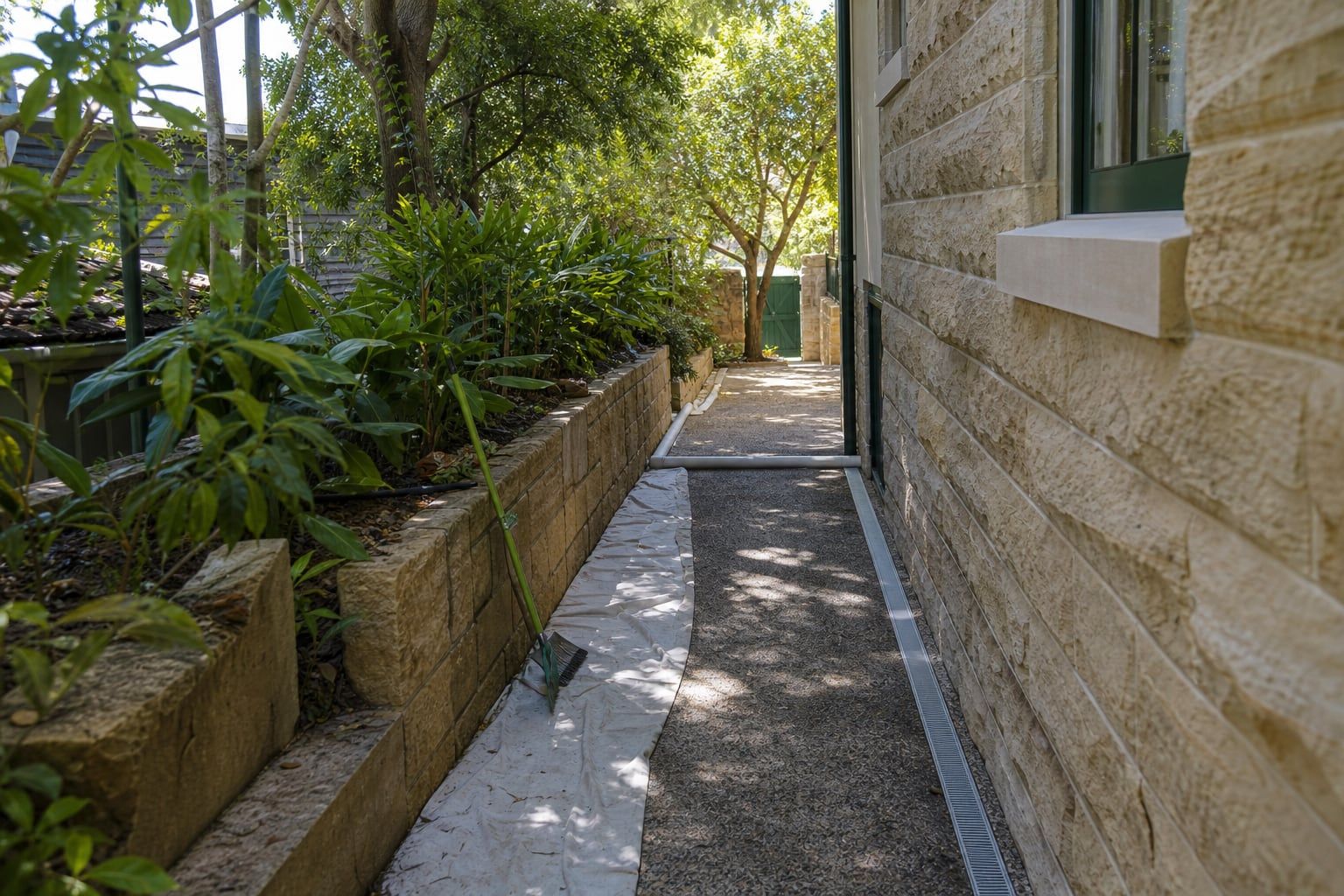
Water comes first. Downpipes are connected to drainage, root-damaged pipes are flagged for repair, and soil or garden beds against the walls are lowered. On sloping blocks, a drain on the uphill side may be needed to stop water running underneath.
Then airflow. We clear blocked vents, remove debris and old fill that stops air moving, and add new vents or air bricks so air can enter on one side and leave on the other. On period houses we use terracotta or pressed-metal vents that suit the original style.
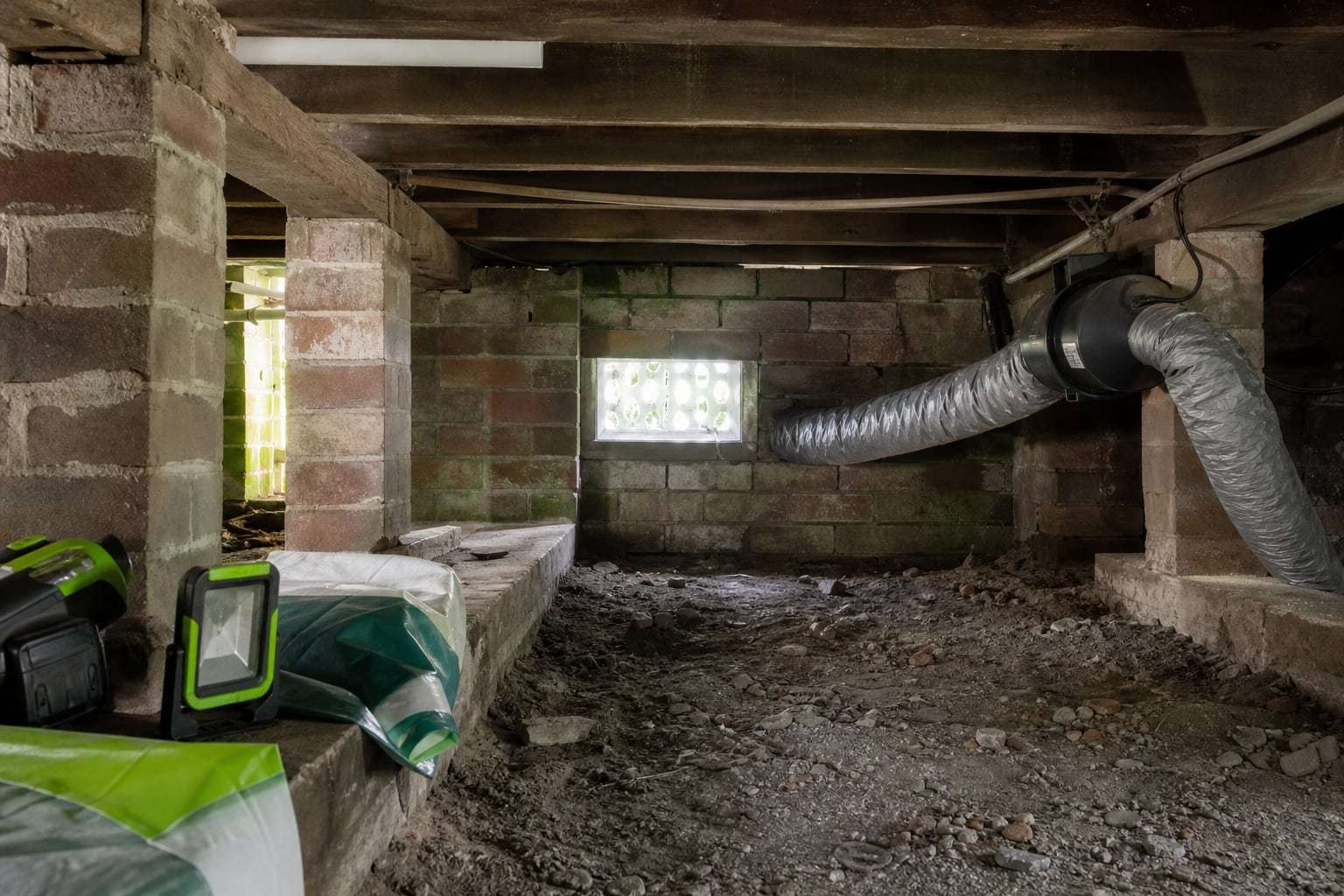
Where natural airflow isn’t enough, usually on long houses, very low subfloors or blocks sheltered by trees and neighbours, we install quiet inline fans with a timer or humidity control.
Looking after it
Once the subfloor is drying, keep it that way. Keep garden beds and mulch clear of the vents, rake leaves away from the base of the house after autumn and storms, and check after any renovation or new deck that the airflow paths are still open. A quick look under the house once a year is enough to spot a new leak or a blocked vent early.
Walls and floors together
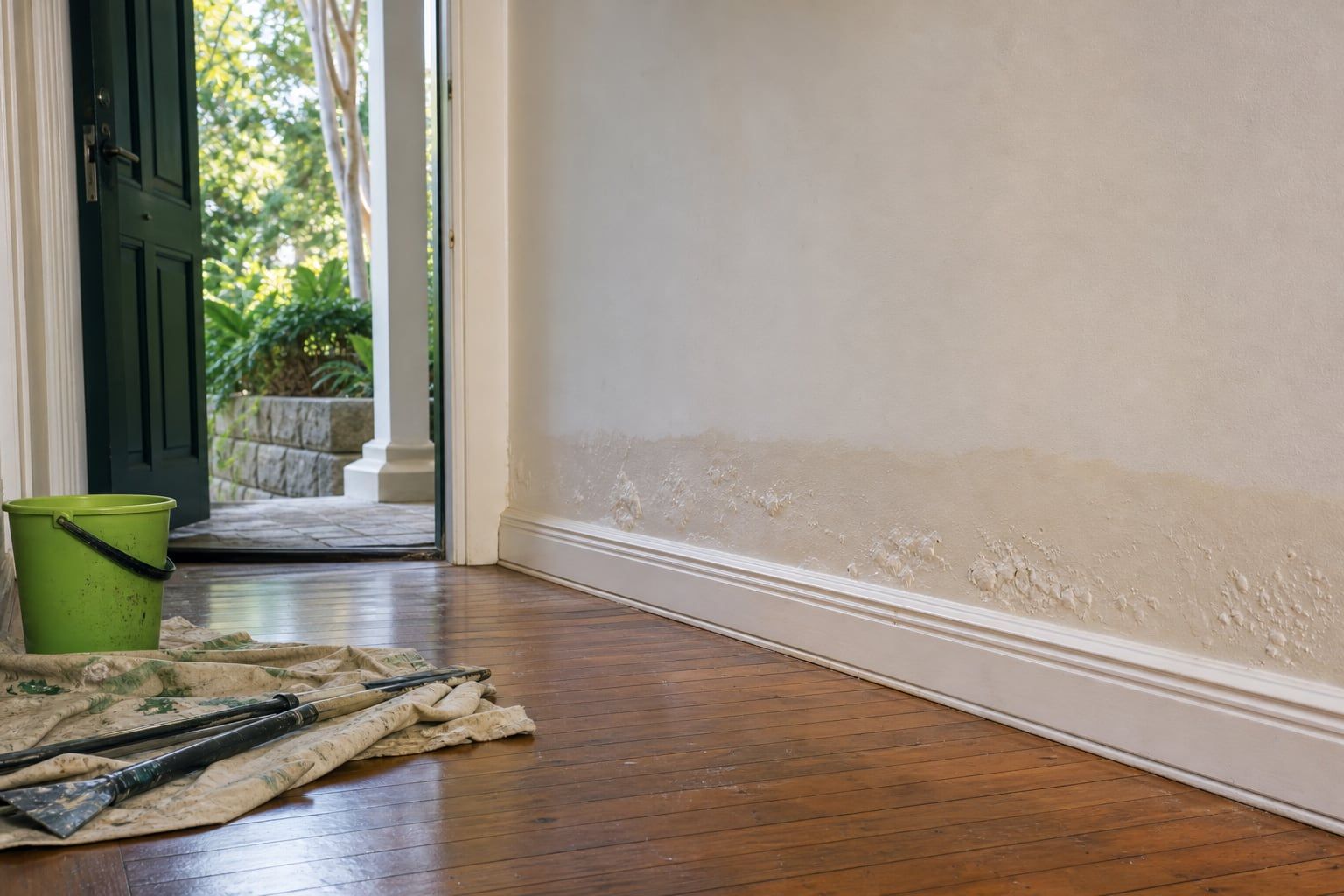
A damp subfloor and rising damp often turn up in the same house. When they do, we combine airflow work with an injected damp course or membrane in the walls and damp plaster repairs inside, all under one quote.
For the full approach, see rising damp treatment. If you’re unsure where your damp is coming from, our page on signs of rising damp is a good place to start.
Updated
What good subfloor ventilation looks like
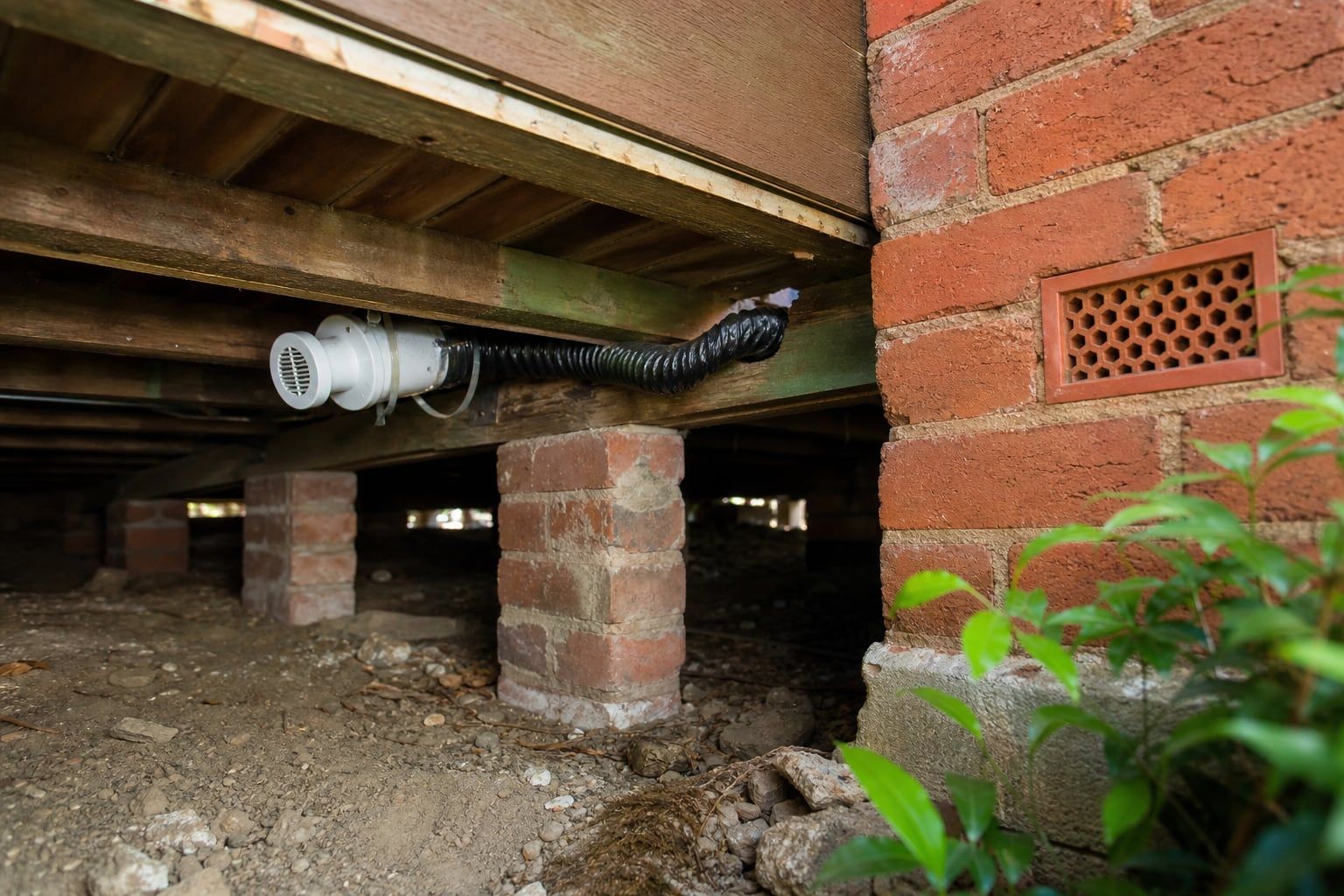
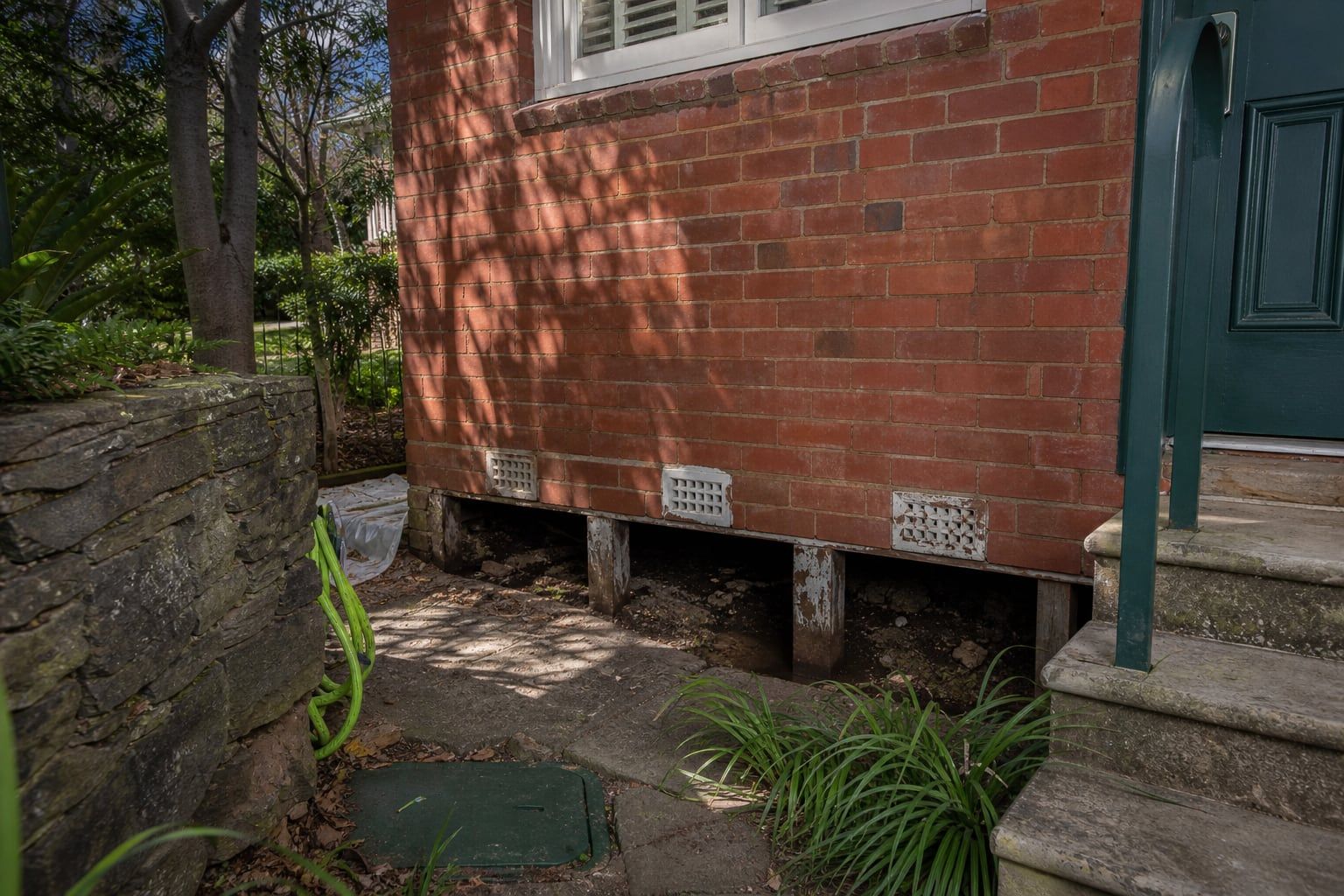
Subfloor Ventilation across the North Shore
Subfloor Ventilation on the North Shore: step by step
- Inspect underneathWe check soil, timber moisture, vents, pipes and signs of mould or decay under the floor.
- Stop the waterLeaks, downpipes discharging under the house and drains blocked by roots or leaves come first.
- Open the ventsBlocked vents are cleared and new air bricks added so air can cross the whole subfloor.
- Fit fans if neededQuiet inline fans move air on a set path where natural flow isn't enough.
Subfloor Ventilation guides for North Shore homeowners
Subfloor Ventilation questions on the North Shore
Something else on your mind? Call and ask.
My vents are original terracotta. Can you match them?
Usually, yes. Terracotta and pressed-metal vents in period patterns are still available, so new vents on a Federation or inter-war house can be chosen to suit the original ones.
How do I know if my subfloor is damp?
A musty smell inside, floorboards that cup or feel soft, and mould on the backs of cupboards against outside walls are the common signs. Under the house, dark damp soil and white or grey mould on timber confirm it.
Are fans noisy?
Modern inline fans are quiet and are mounted under the floor away from bedrooms. Most people don't notice them running.