Waterproof Tanking and Drainage North Shore
Carry water away from the house outside, and waterproof the walls that have to stay against the ground.
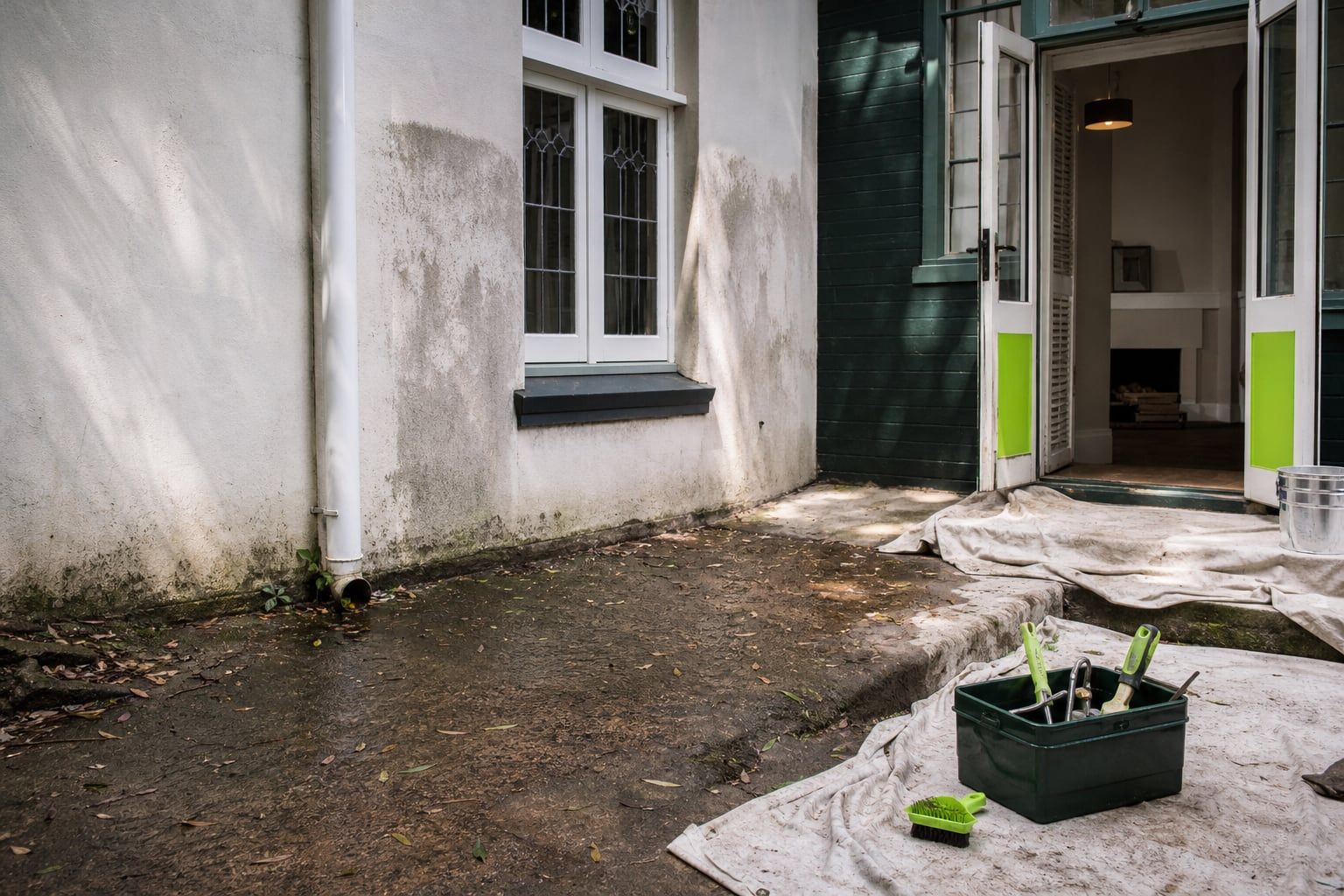
Waterproof tanking and drainage solve the damp that a damp course can’t reach. A damp course stops water rising up through a wall from the footing. But on many North Shore houses the water is coming in from the side, because the wall has soil, rock or paving against it, or because the house is built into a slope and groundwater runs straight into it.
Where we see it on the North Shore
The lower North Shore is built on sandstone, and many houses in Mosman, Cremorne, Cammeray, Wollstonecraft and Lane Cove have a lower level or a back wall cut into the rock. Water running along the top of the sandstone after rain reaches those walls and seeps through.
On the upper North Shore the issue is often clay and slope. In Pymble, Turramurra, Wahroonga and the sloping streets off the Pacific Highway, houses built into the hillside have rooms and garages below ground on the high side. Clay soil holds water against those walls for days after rain.
And on flat blocks, the cause is usually something added later: a garden bed against the wall, a patio poured above the damp course, or a driveway falling toward the house.
Drainage outside
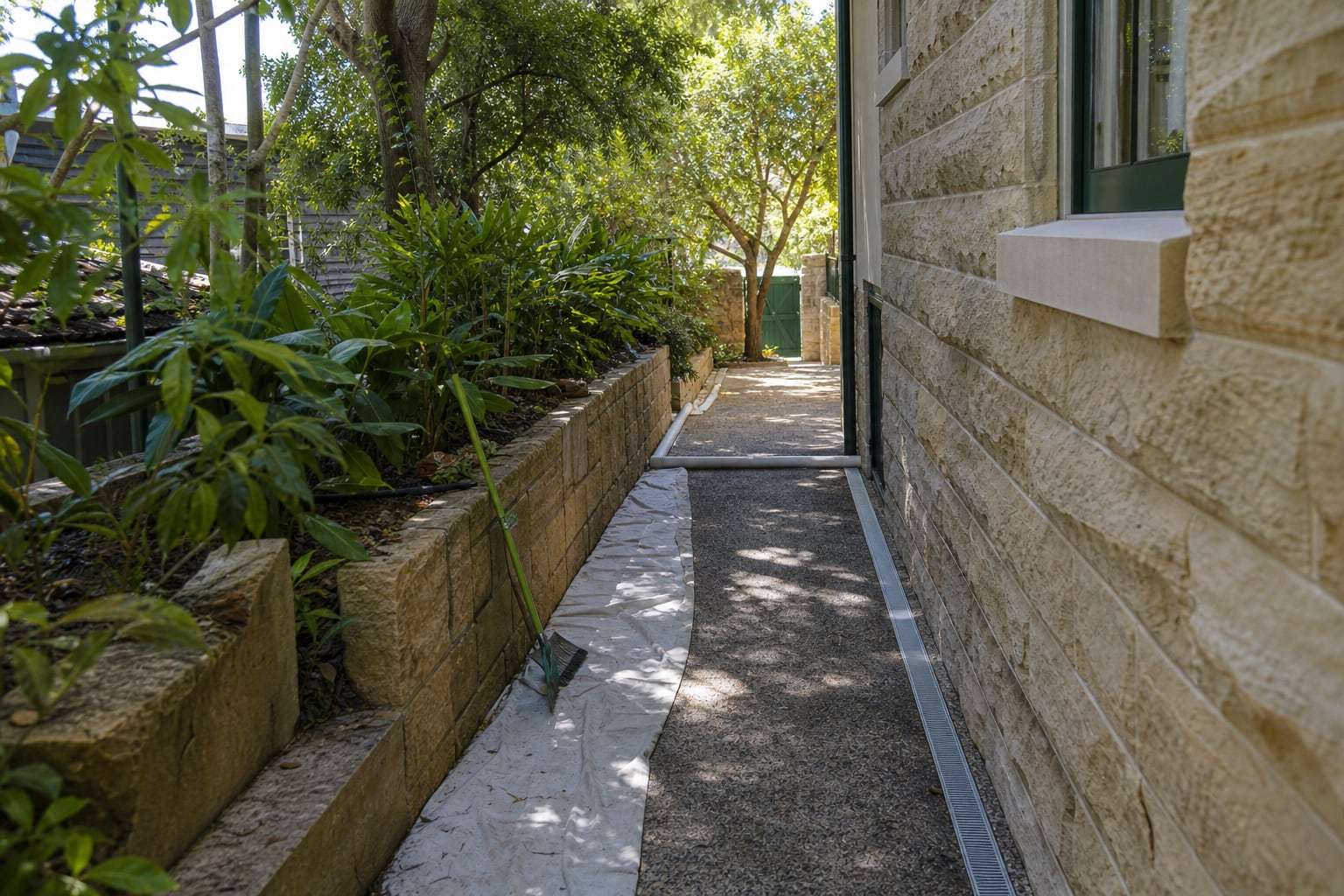
Where we can reach the outside of the wall, we deal with the water there first. That may mean lowering garden beds and paths so they sit below the damp course, regrading paving so it falls away from the house, connecting downpipes to the stormwater, or installing an agricultural drain in a gravel trench along the high side of the house to intercept groundwater.
On North Shore blocks we pay particular attention to roots. Large trees send roots into drains and old pipes, so we use pipe, fittings and layouts that resist root entry and keep the drain away from major trees where possible.
Tanking inside
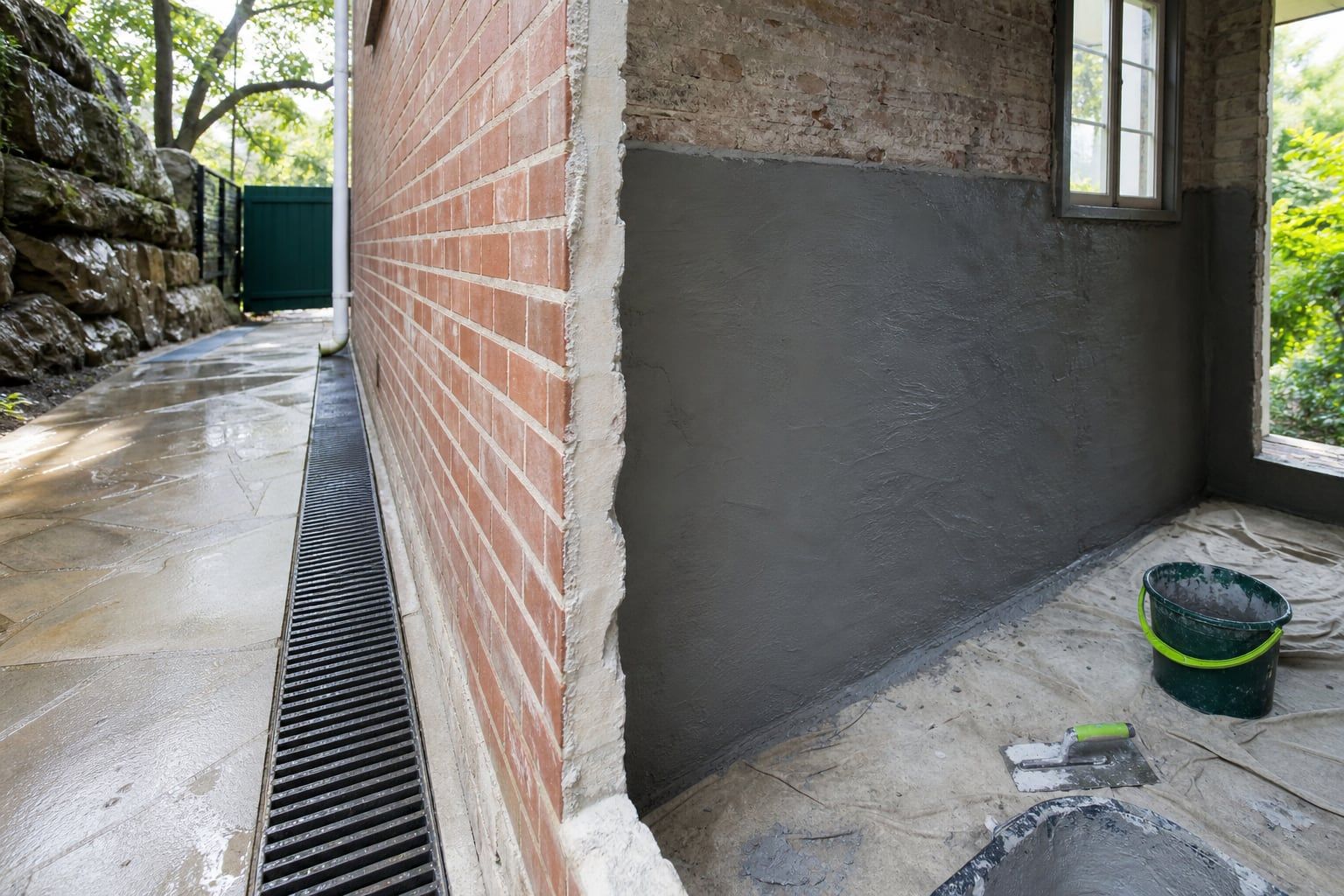
When the ground has to stay against the wall, as with a room cut into sandstone or a wall below a neighbour’s yard, we waterproof the inside face. Tanking is a cementitious coating or membrane built up in layers, carried around corners and down onto the floor so water can’t find a way around it. Once cured, it’s covered with render or a lining so the room can be finished and used normally.
Getting the diagnosis right
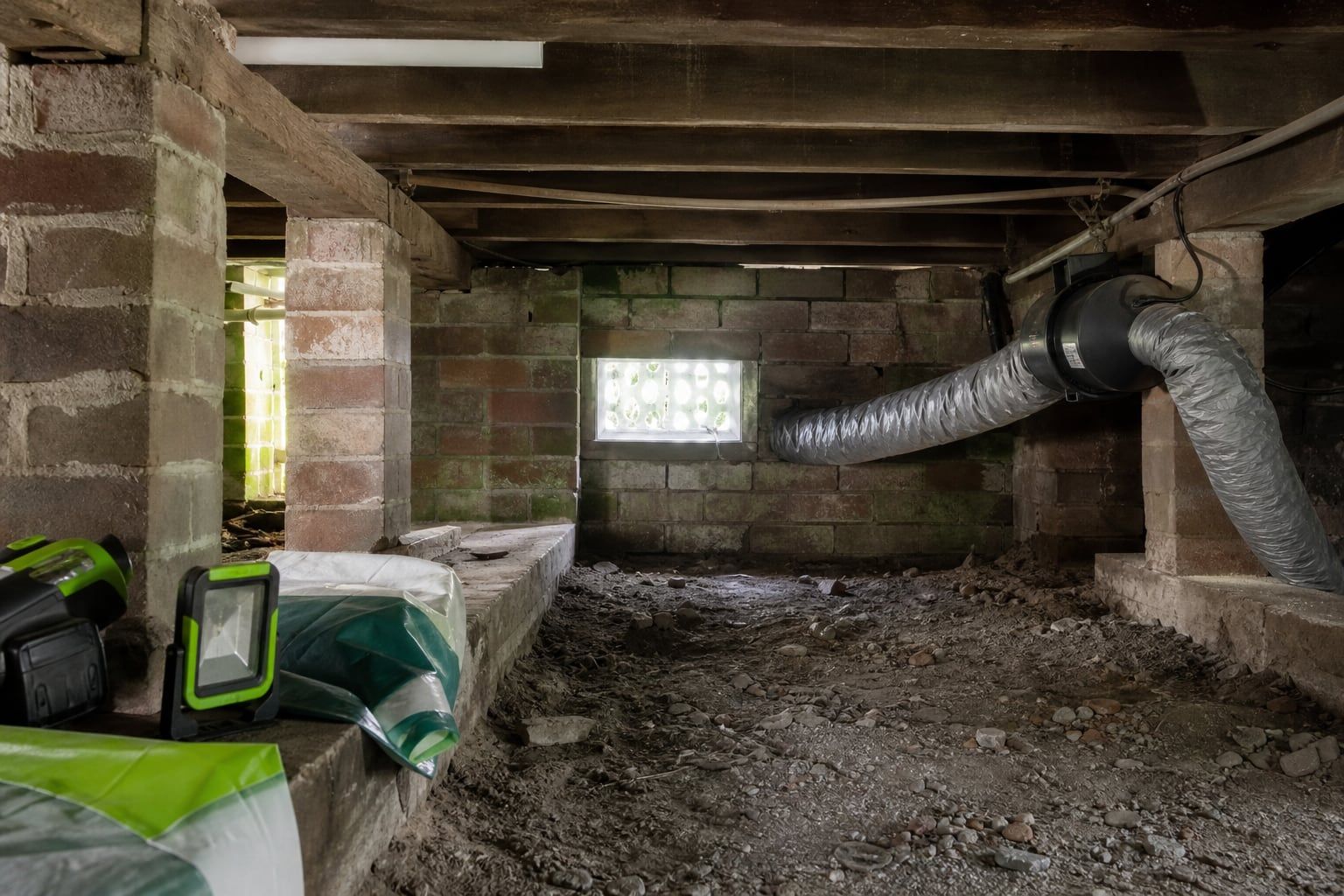
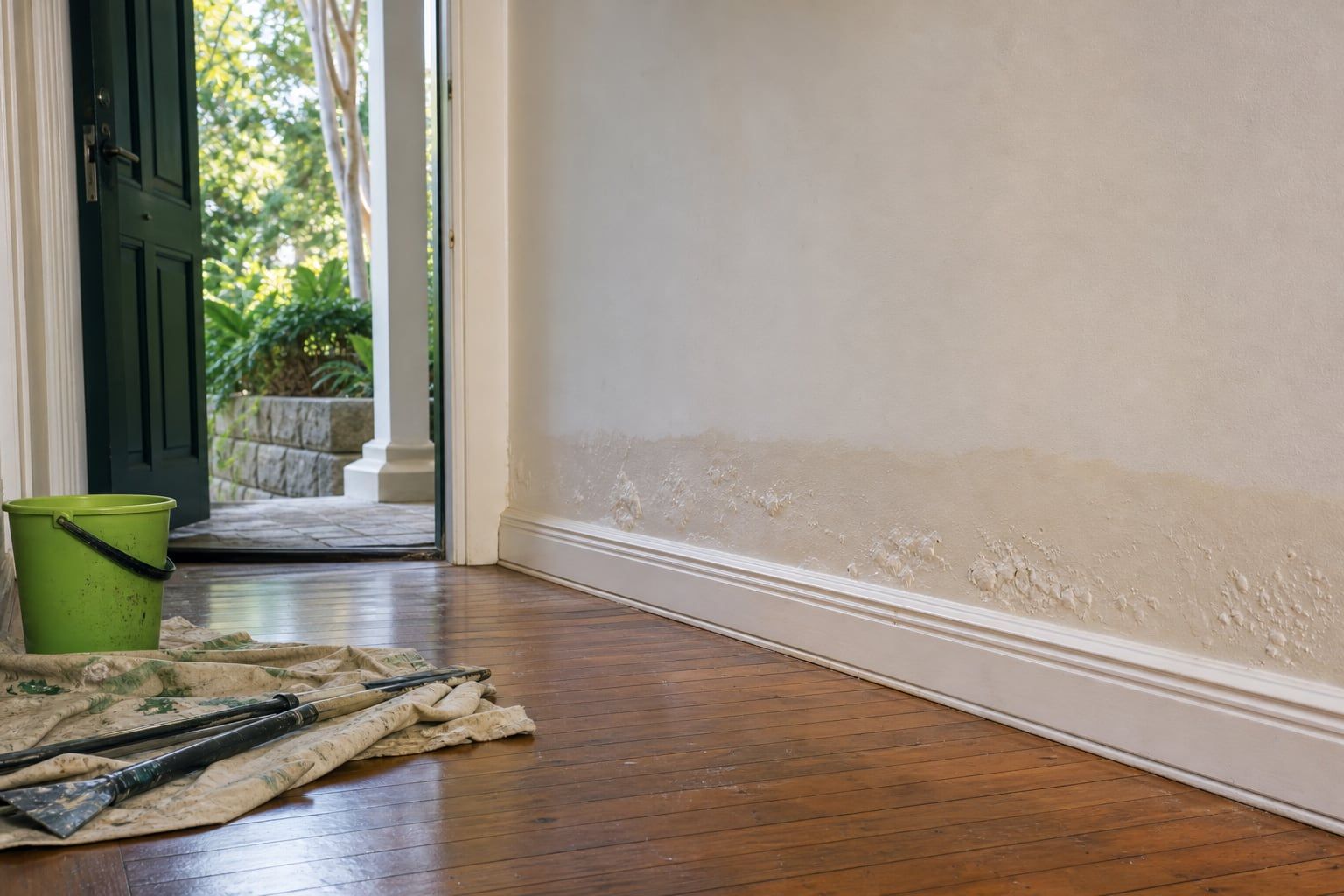
Not every damp lower-level wall needs tanking. We survey the wall to see whether the damp is even along the base, which suggests rising damp, or heavier on the high side and worse after rain, which points to water coming through from the slope. Often a house has both. The plan might include tanking on one wall, a chemical damp course on internal walls and subfloor ventilation under the timber floor at the other end of the house.
Finishing off
Once the water is stopped, the internal finish is restored. Salt-loaded plaster on walls that weren’t tanked is replaced with a salt-resistant render, and the room is left ready for paint.
Every quote explains what goes outside, what goes on the wall and why. For the full process, see rising damp treatment, or read shady blocks and damp walls for how tree-covered, sloping blocks affect damp.
Updated
What good waterproof tanking and drainage looks like
Waterproof Tanking and Drainage across the North Shore
Waterproof Tanking and Drainage on the North Shore: step by step
- Find the water pathWe trace where water enters the block and which walls it reaches, after rain and in dry weather.
- Drain outsideSoil is lowered or an agricultural drain installed to carry water away from the wall.
- Tank the insideWhere the ground must stay against the wall, a waterproof system is built up on the inside face.
- Protect and finishThe tanking is covered with render or lining so the room can be used and decorated.
Waterproof Tanking and Drainage guides for North Shore homeowners
Waterproof Tanking and Drainage questions on the North Shore
Something else on your mind? Call and ask.
When is tanking needed instead of a damp course?
When water comes through the side of the wall rather than up from the footing. Lower rooms cut into a slope, walls backing onto sandstone and walls with soil piled against them all need tanking or drainage, because a damp course can't stop sideways water.
Can tree roots affect drainage?
Yes. On the North Shore, roots from large gums and established gardens often break into old terracotta stormwater pipes and agricultural drains. We check for that and use pipe and layouts that resist root entry.
Can a cellar or lower room be made usable?
In most cases. With drainage on the high side and tanking on the walls below ground, many North Shore lower levels can be made dry enough for storage, a study or living space.