Chemical Damp Course North Shore
An injected damp barrier along the base of brick walls, put in without removing a single brick.
A chemical damp course is the most common repair we put into North Shore brick houses. The walls on most homes from Chatswood to Wahroonga are double brick, laid in lime or early cement mortar, and many of the original damp courses of slate or bitumen have failed. An injected course replaces that barrier without taking the wall apart.
How it works
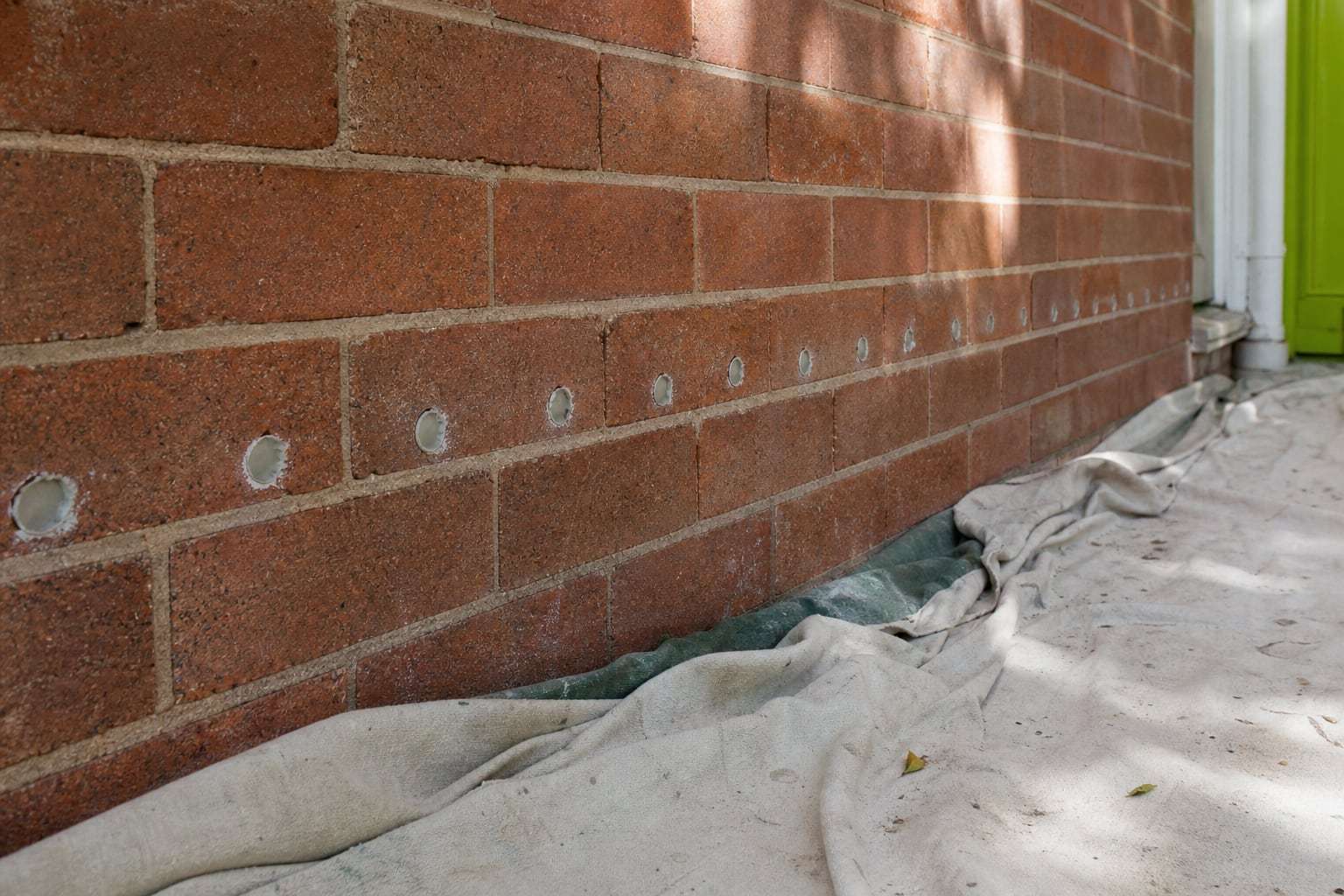
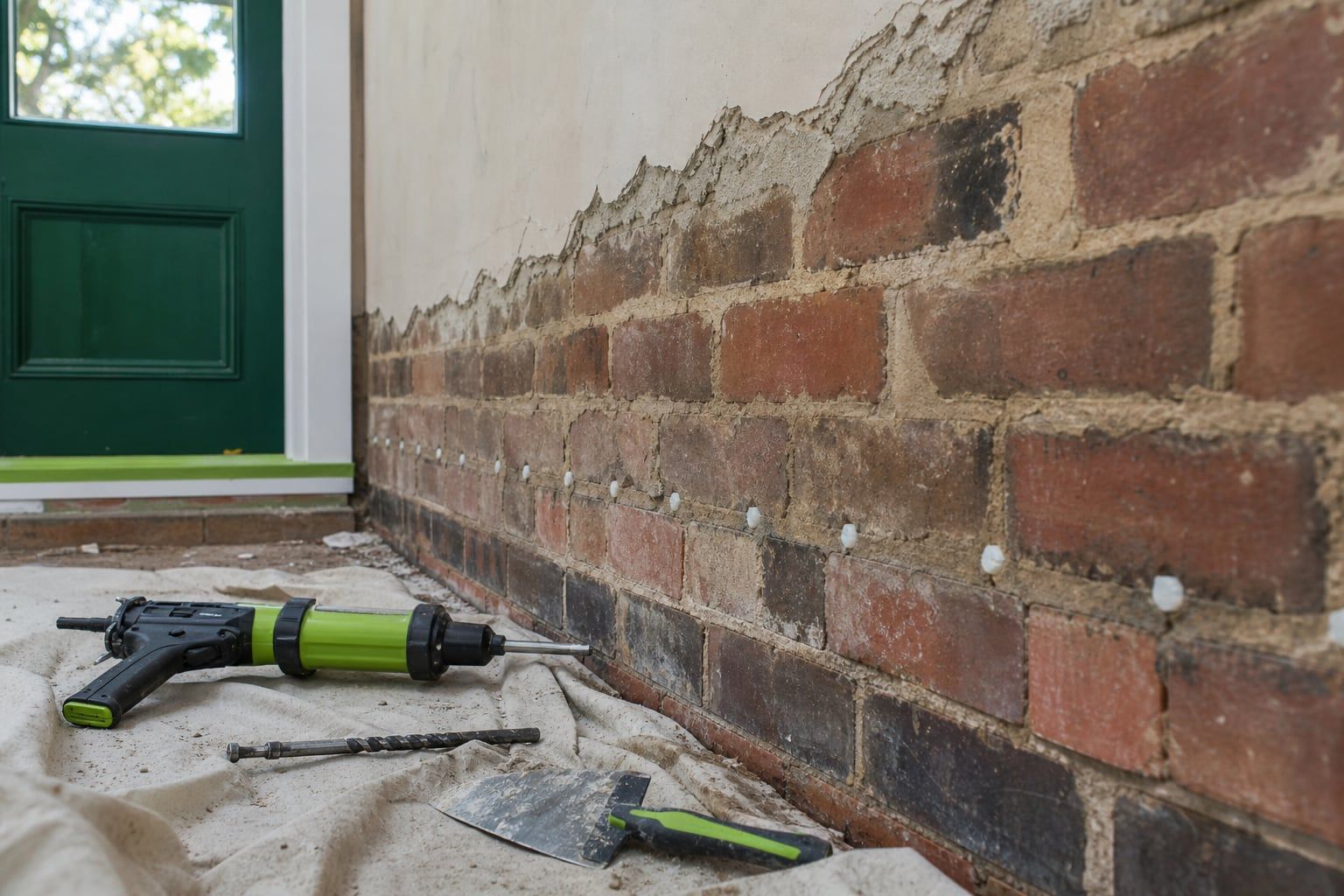
We drill a row of holes into one continuous mortar joint near the base of the wall and fill them with a damp-proofing cream. The cream spreads sideways through the mortar from each hole and joins up with its neighbours, forming a band the water can’t rise through. Above that band, the wall gradually dries out.
Because it goes into the mortar rather than the brick, it suits face brick walls well. The holes are small, sit in the joint and are filled with mortar to match.
Where it suits North Shore houses
It’s the right choice for most brick walls with true rising damp: the Federation homes of Killara and Roseville, the inter-war bungalows of Lindfield, Willoughby and Artarmon, and the brick homes built across Pymble, St Ives and Turramurra after the war. If the bricks are sound and there’s a good continuous mortar course in the right place, injection works.
It isn’t right for everything. Walls built directly on sandstone blocks, rubble foundations and very soft early bricks don’t hold the cream evenly. Those get a replacement damp course instead.
Getting the height right
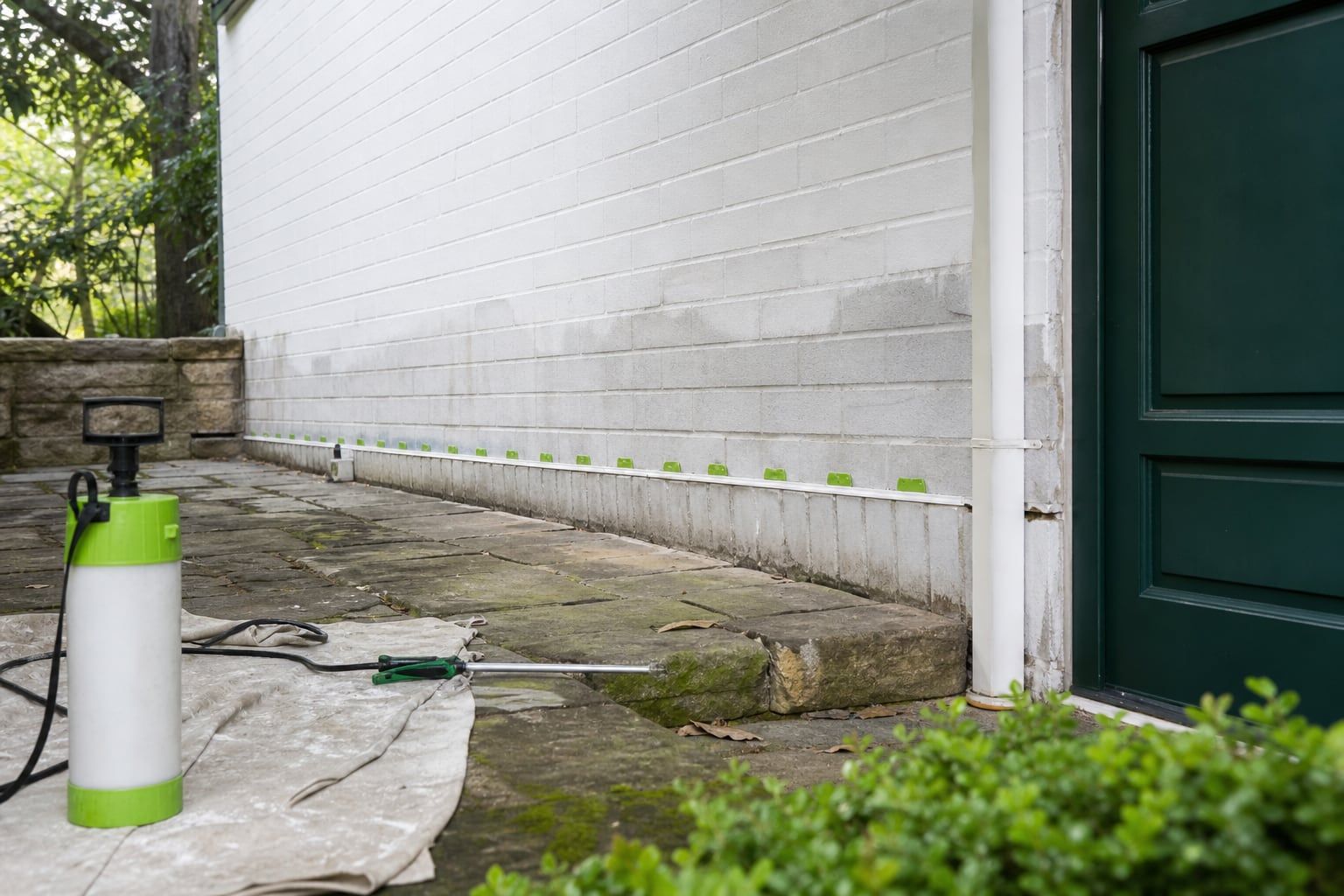
The barrier only works if it sits below the floor inside and above the ground outside. On flat blocks that’s straightforward. On the sloping blocks common through the North Shore, the ground level changes along the wall, so the course may need to step down, or go in from the inside on the high side of the house.
We also look at what’s outside. If a garden bed or path has been built up over the old course, the soil needs to come down too, or water will go straight around the new barrier.
Double brick walls
Double brick has two leaves with a cavity between them. Both leaves need treating. Depending on wall thickness and access, we either drill right through to reach the inner leaf or inject from each side. We also check the cavity, because older houses often have mortar droppings or rubble at the bottom that bridge the gap and carry water from the outer leaf to the inner one.
After the injection
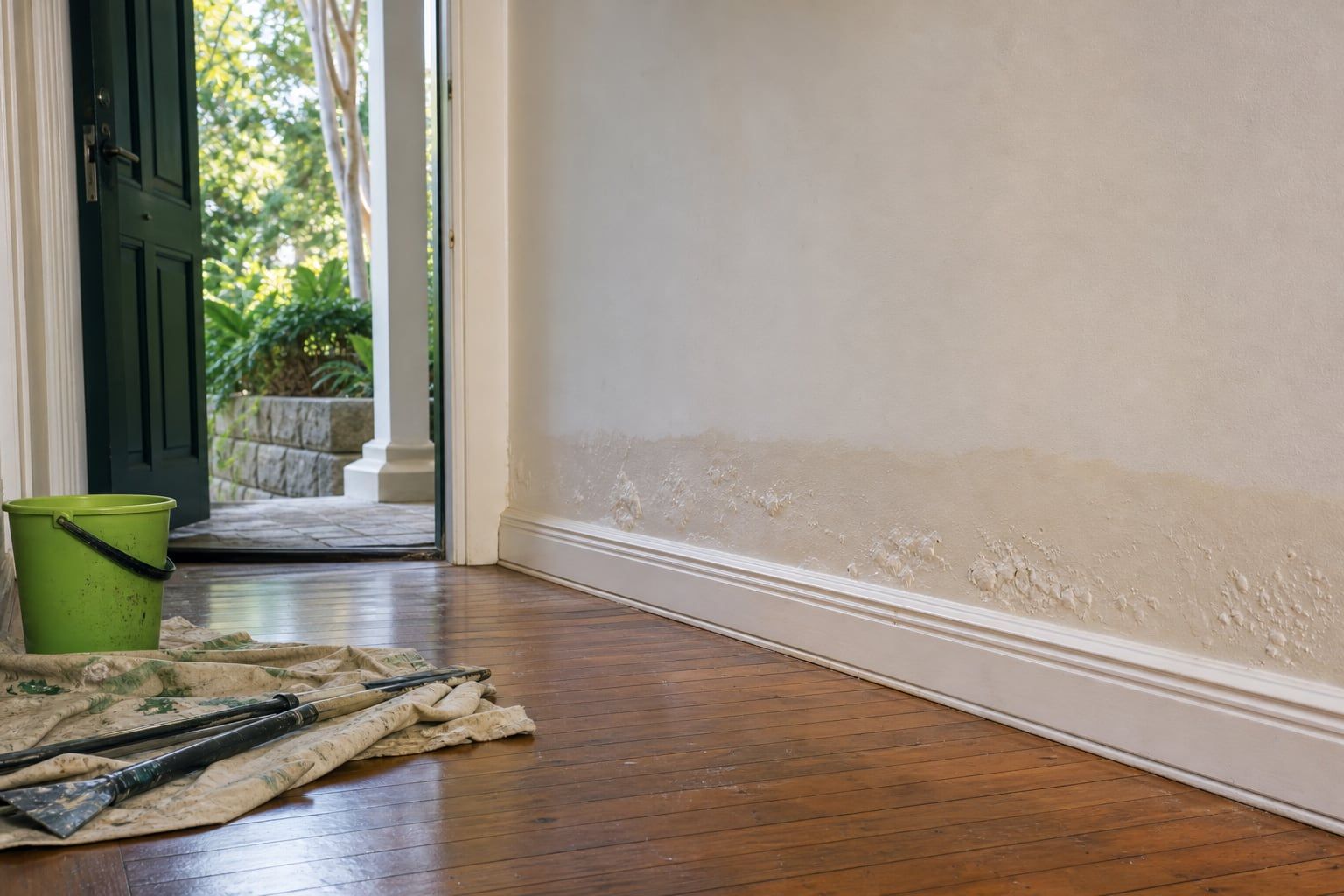
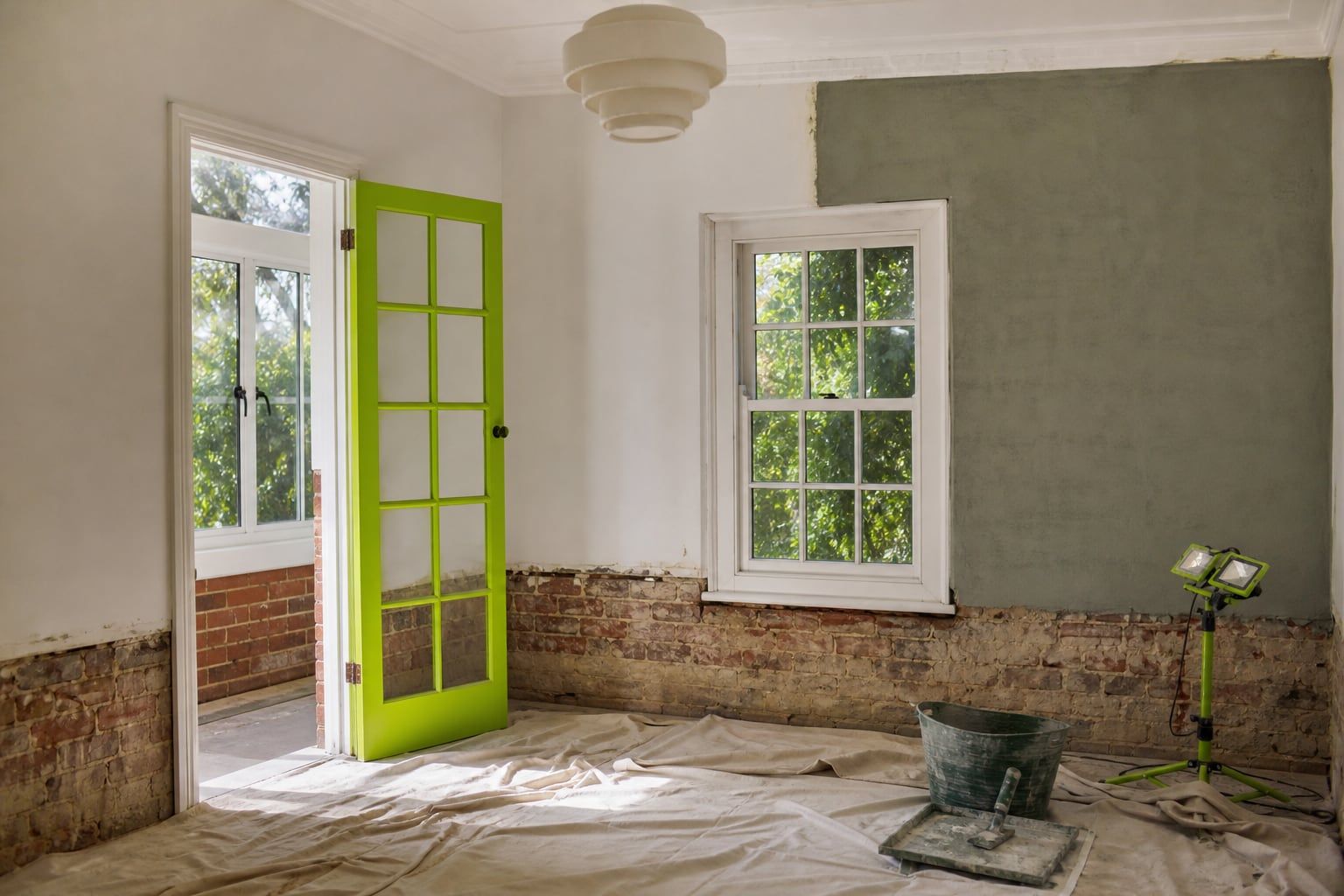
The wall above the new course is still damp and still holds salt. Plaster that has been sitting on that wall will keep blistering until it’s replaced. So the quote always includes stripping the damaged plaster, letting the wall dry for a period suited to its thickness, and applying a salt-resistant render that tolerates any salt left behind.
Part of a wider plan
An injected course is often one piece of the job. Houses with a damp crawl space may need subfloor fans or more vents. Houses with leaf-blocked drains or broken stormwater pipes need those fixed first. Our page on rising damp treatment shows how the parts fit together, and our guide on damp in Federation homes covers the older brickwork in more detail.
Updated
What good chemical damp course looks like
Chemical Damp Course across the North Shore
Chemical Damp Course on the North Shore: step by step
- Choose the courseWe pick a continuous mortar joint below the floor line and above the ground outside.
- DrillHoles are drilled into that joint at regular spacing, deep enough to reach every leaf of brick.
- InjectDamp-proofing cream fills each hole and spreads through the mortar to form a continuous barrier.
- FinishHoles are filled to match the mortar and damaged plaster is replaced with salt-tolerant render.
Chemical Damp Course guides for North Shore homeowners
- Damp in Federation homes: looking after old North Shore brickworkWhy century-old North Shore houses get damp walls, what changed since they were built, and how to repair them without harming original fabric.
- Rising damp in heritage conservation areas: a guide for North Shore ownersWhat to think about when treating damp in a North Shore house in a conservation area or on a heritage list, and which methods respect the original building.
Chemical Damp Course questions on the North Shore
Something else on your mind? Call and ask.
Can you inject tuckpointed face brick?
Yes. We drill the bed joint rather than the brick and fill the holes with mortar matched as closely as possible, so on tuckpointed walls the repair is hard to see. On walls where the look is critical we may drill from inside instead.
How do you treat double brick?
Both leaves need the barrier. We drill long enough to reach through to the inner leaf, or treat each side separately, and check the cavity isn't filled with mortar droppings that would carry water across.
How long does the barrier last?
A properly installed injected course is designed to last for decades. What usually causes damp to return is the ground or paving outside being raised above it later, so we'll tell you where the course sits.