Shady blocks and damp walls: why tree-covered North Shore homes stay wet
How heavy tree cover, leaf litter, roots and slope keep North Shore walls damp, and what you can do about each one.
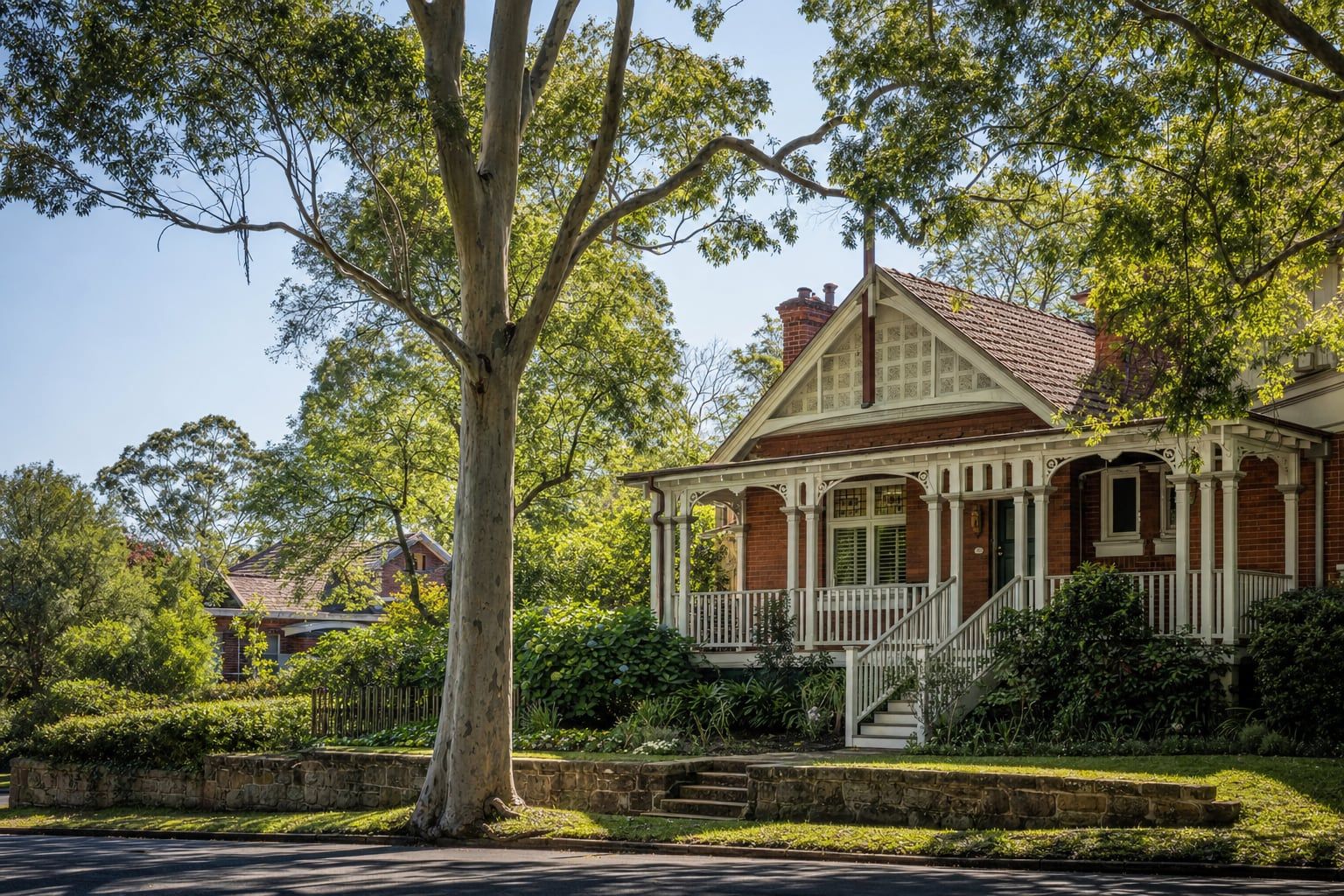
Shady blocks and damp walls go together across much of the North Shore. Turramurra, Wahroonga, Pymble, St Ives, Lindfield and Killara are known for their canopy of blue gums, turpentines and established gardens. It’s a big part of why people choose to live there. But all that shade, along with the leaves and roots that come with it, changes how a house handles water. Walls that would dry out in a day on an open block can stay damp for weeks under heavy cover.
That doesn’t always mean rising damp. Often the walls are damp because of what’s happening around the house, and the fix is in the gutters, the drains and the subfloor rather than in the wall.
How shade affects drying
Brick walls get wet regularly: from rain, from the ground, from humid air. What keeps them healthy is their ability to dry out again. Sun and air movement do most of that work.
Under thick canopy, walls get little direct sun, and the air close to the ground is still and humid. South-facing walls on shady blocks may never get sun at all. Every wetting takes longer to dry out, so the walls stay damp for more of the year. Moss and algae grow on the brick, and inside, paint and plaster near the base can blister even without a failed damp course.
Leaf litter and gutters
Big trees drop a lot of material: leaves, bark, gumnuts and twigs. It collects in gutters, valleys and downpipes, and once they’re blocked, rain overflows down the face of the wall or pours out at the base. Leaf litter also builds up against the walls and around low subfloor vents, holding moisture against the brick and blocking airflow under the floor.
The pattern this produces is easy to confuse with rising damp: a band of damp at the bottom of the wall, often worst near a downpipe or under a valley. The difference is that it gets worse after storms and usually affects one part of the house more than the rest.
Roots and broken pipes
Many North Shore houses still have their original terracotta stormwater pipes, often laid close beside the walls. Tree roots find the joints, push in and crack them. The water that should be carried away to the street then soaks into the ground right against the house.
That keeps the soil around the footing saturated. Even a sound damp course can be overwhelmed, and walls that were dry for decades start showing damp. If damp appeared some years after a tree grew up nearby, or seems to centre on one corner of the house, a broken pipe is worth checking for.
Slope and clay
Shady blocks are often sloping blocks too. Much of the upper North Shore sits on clay, which holds water and drains slowly. On a slope, water moves through that clay toward the house and collects against the uphill walls and under the floor. Combined with shade, the uphill side of the house can stay damp almost permanently.
How to tell it from rising damp
Look at where it is. Rising damp affects the base of walls fairly evenly around the house. Damp caused by shade, gutters or drains tends to concentrate on the shady side, near downpipes, or on the uphill walls.
Watch the weather. Rising damp doesn’t change much with rain. Damp from gutters, broken pipes and slope gets clearly worse after storms.
Check how high it goes. Rising damp usually fades out below about a metre. Overflowing gutters can wet a wall from the top down.
A moisture survey, with readings across each wall and before and after rain where possible, makes the pattern clear.
Fixing damp on a shady block
Keep the gutters clear. Gutter guards suited to gum leaves and regular cleaning stop overflow. Check that downpipes are connected to the stormwater and not discharging at the base of the wall.
Clear the base of the walls. Rake leaf litter and mulch away from the brickwork and vents, and keep garden beds below the damp course.
Repair the stormwater. If pipes are cracked or root-damaged, they need repair or replacement. Getting them checked with a camera is often money well spent.
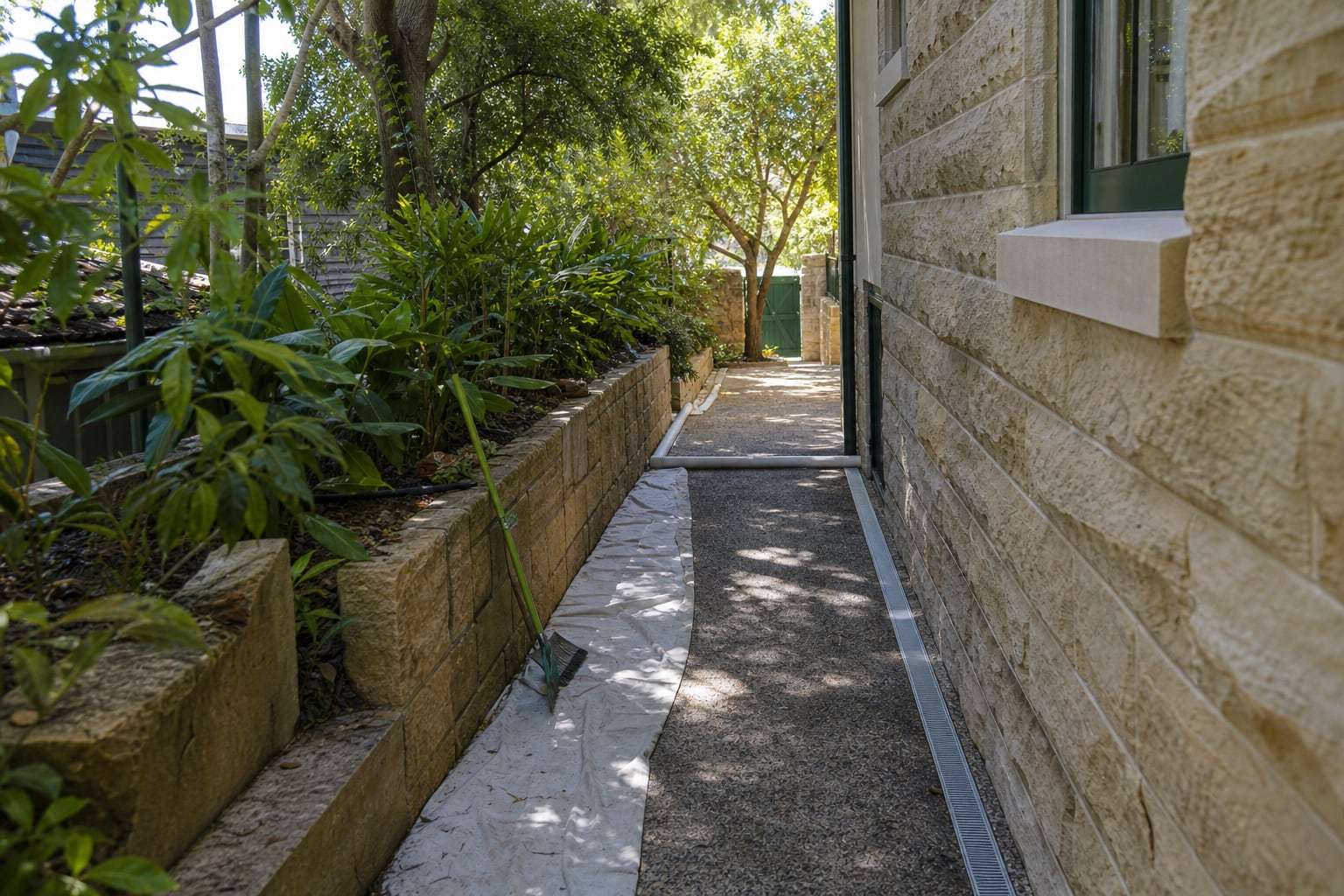
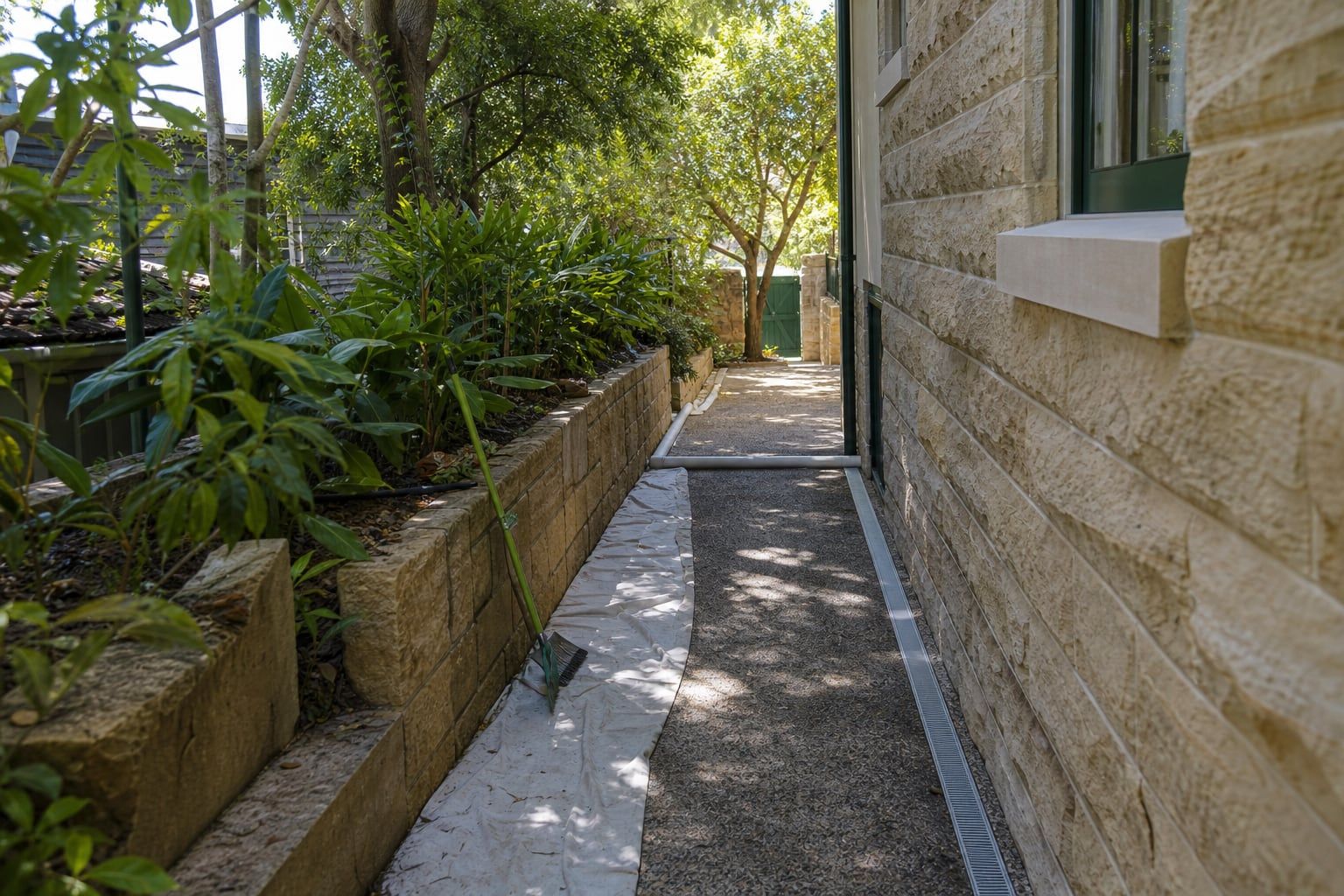
Drain the high side. On sloping blocks, an agricultural drain on the uphill side intercepts groundwater before it reaches the house. Our page on damp wall drainage explains how it’s done.
Ventilate the subfloor. A shady, still crawl space under a timber floor benefits more than most from cleared vents, added air bricks or quiet fans. See subfloor ventilation.
Treat rising damp where it’s genuinely there. Some houses have shade problems and failed damp courses. The survey will show it, and rising damp treatment deals with that part.
Getting it surveyed
If your house sits under heavy canopy and the walls are damp, it’s worth working out exactly why before paying for any treatment. We’ll measure the walls, look at the gutters, drains, slope and subfloor, and tell you which parts of the problem are the trees and which, if any, are rising damp. Our page on signs of rising damp shows what to look for, and our overview of North Shore rising damp explains how we work.
Updated
Shady blocks and damp walls: common questions
Something else on your mind? Call and ask.
Should I remove trees to fix damp?
Rarely, and on the North Shore large trees are often protected anyway. Most of the damp that trees contribute can be fixed with gutter guards, drainage repairs and better subfloor airflow without touching the tree.
Can tree roots damage the house's damp course?
Roots don't usually damage the course itself, but they break stormwater pipes and drains beside the house. The leaking water then soaks the ground against the wall, which can make the walls damp even with a working course.
Why is only the south side of my house damp?
The south side gets the least sun, so it dries slowest. Under heavy canopy that effect is stronger. Walls that are damp only on the shady side may have a drainage or drying problem rather than rising damp.
Waterproof Tanking and Drainage on the North Shore
More guides for North Shore homeowners
- Damp in Federation homes: looking after old North Shore brickworkWhy century-old North Shore houses get damp walls, what changed since they were built, and how to repair them without harming original fabric.
- Rising damp in heritage conservation areas: a guide for North Shore ownersWhat to think about when treating damp in a North Shore house in a conservation area or on a heritage list, and which methods respect the original building.