Rising damp symptoms: how to read the signs in a North Shore home
Each sign of damp, what it usually points to, and how to tell rising damp from shade, gutters and broken pipes.
Reading damp in North Shore homes
Rising damp symptoms are fairly consistent from house to house, but on the North Shore they often turn up alongside two other problems: walls that stay wet because they’re shaded under heavy tree cover, and ground soaked by blocked gutters or root-damaged pipes. Knowing which signs point where saves money, because each one has a different fix.
Here are the symptoms we see most often, what they usually mean, and what to check.
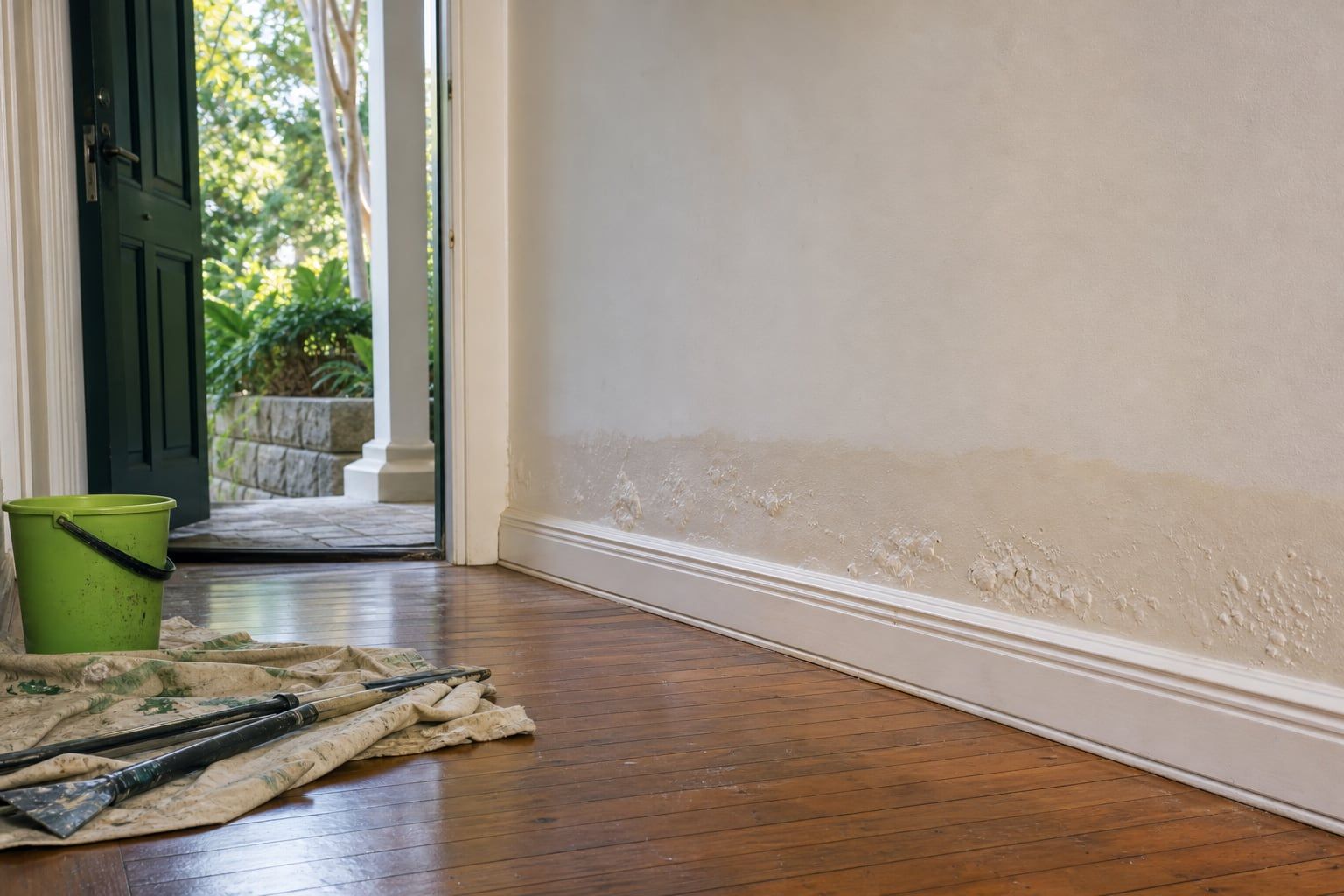
Paint blistering near the floor
Bubbles or blisters in the paint along the lower part of a wall happen when moisture and salt push out from behind the coat. If they run along several walls at roughly the same height, rising damp is likely. If they’re concentrated near a downpipe or one corner, look for a drainage problem outside.
White salt bloom
A white, powdery or fluffy deposit on plaster or face brick is salt left behind as water evaporates. Low on internal walls it’s a classic sign of water rising from the ground. On outside brickwork it can also come from rain soaking in and drying out.
Plaster turning to sand
In older houses with lime plaster, salt damage can make the plaster soft and sandy, so it crumbles under a fingernail or falls away behind the paint. It won’t harden again once it’s gone, which is why salt-damaged plaster repair is part of every damp job.
A brown tide line
A brownish line across the wall, usually somewhere below a metre, marks where rising water has been evaporating. A level line running through several rooms is a strong pointer to rising damp. A line that climbs higher on one side of the house suggests water pressing in from the slope.
Soft skirting boards
Skirtings fixed to damp walls rot from the back. They can look sound but feel spongy when pressed. In Federation homes with deep timber skirtings, this is often the first sign people notice.
Mould in corners and cupboards
Black or grey mould in room corners near the floor, inside built-in wardrobes on outside walls, or behind furniture comes from damp air and cold, damp surfaces. It can come from rising damp, a damp subfloor or condensation in rooms with little airflow.
Musty front rooms
The front rooms of Federation and inter-war houses often have the thickest walls and the least airflow. A stale, earthy smell there, strongest in winter, usually means damp masonry or a damp crawl space underneath. Subfloor ventilation often helps.
Moss and green staining outside
Moss, algae and green staining on external brick, especially low down on the south side, show that the wall stays wet for long periods. On heavily shaded blocks that’s often down to slow drying rather than rising damp. Our guide on shady blocks and damp walls explains why.
Damp only on the shady side
If only the walls facing south or sitting under the densest canopy are damp, the problem may be drying rather than rising water. It’s still worth surveying, because shade and a failed damp course often occur together.
When the signs add up to rising damp
The likely answer is rising damp when you see most of these together: damage along the base of ground-floor walls on several sides, fading out below about a metre, present in dry weather, with salt in the plaster and soft skirtings. In an older house, our guide to damp in Federation homes explains why it happens.
When the pattern doesn’t fit, the fix could be gutters, drains, tanking or airflow instead. That’s why we measure before we recommend anything. Our page on rising damp treatment explains the survey, and our overview of North Shore rising damp covers the whole job.
Updated
What fixes these symptoms on the North Shore
More on damp for North Shore homeowners
- Damp in Federation homes: looking after old North Shore brickworkWhy century-old North Shore houses get damp walls, what changed since they were built, and how to repair them without harming original fabric.
- Shady blocks and damp walls: why tree-covered North Shore homes stay wetHow heavy tree cover, leaf litter, roots and slope keep North Shore walls damp, and what you can do about each one.
- Rising damp in heritage conservation areas: a guide for North Shore ownersWhat to think about when treating damp in a North Shore house in a conservation area or on a heritage list, and which methods respect the original building.
Questions about rising damp symptoms
Something else on your mind? Call and ask.
How do I know it's rising damp and not something else?
Rising damp sits low, along the base of ground-floor walls, fading out below about a metre, and it's there in dry spells as well as after rain. Damp that appears higher, centres on one corner or gets worse after storms usually has another cause.
Is rising damp a health risk?
Damp walls and subfloors encourage mould, which can aggravate asthma and allergies. The damp itself is mainly a building problem, but it's worth fixing for both reasons.
Will a dehumidifier help?
It can reduce condensation and musty air, but it won't stop a wall drawing water from the ground. Use it as a short-term comfort measure, not a fix.