Damp in Federation homes: looking after old North Shore brickwork
Why century-old North Shore houses get damp walls, what changed since they were built, and how to repair them without harming original fabric.
Damp in Federation homes is one of the most common things we’re called to on the North Shore. Roseville, Lindfield, Killara, Gordon, Pymble, Wahroonga and the older parts of Mosman and Chatswood have hundreds of houses built between the 1890s and the 1920s. They were built solidly, with double brick walls, heavy tiled roofs and generous rooms. But they were built with the materials of their time, and those materials are now more than a hundred years old.
This guide explains why these houses get damp, what has usually made it worse, and how to repair them without damaging what makes them worth owning.
How Federation houses were built to handle damp
Builders of the period knew about rising damp. Most houses were given a damp-proof course, typically a layer of slate, a bitumen-based compound or tarred felt laid in a mortar joint a few courses above the ground. Walls were double brick with a cavity between the leaves, which stopped rain driving through to the inside. Floors were raised on piers with vented crawl spaces underneath, and terracotta or pressed-metal vents let air move through.
Inside, walls were finished with lime plaster, and the brick was laid in lime mortar. Both are soft and breathable. Moisture that did get into the wall could evaporate through the surface without doing much harm.
It was a system that worked well as long as each part stayed in place.
What has changed since
The old damp course has aged. Slate cracks when the house moves, bitumen goes brittle, and felt rots. After a century, many original courses have breaks along them, and water rises through the gaps.
The ground outside has risen. Over decades, garden beds get built up against walls, lawns are topdressed, paths are relaid on top of old ones and patios are poured at the back door. Many North Shore houses now have soil or paving above their original damp course on at least one side. Water then bypasses the course completely.
The vents have gone. Back extensions built on slabs close off half the subfloor. Verandahs get enclosed. Decks are built over vents. Garden beds bury them. A crawl space that once had air moving through it ends up still and humid.
The walls have been sealed. In the mid-twentieth century it became common to replaster with gypsum, re-render with cement and paint with acrylic. All of those are less breathable than the original lime. Moisture that used to evaporate gets trapped, salt builds up behind the finish, and the damage shows faster.
The cavity has been bridged. Mortar droppings, rubble and debris collect at the bottom of the cavity over the years. Once they rise above the damp course, they form a bridge that carries water from the outer leaf to the inner one.
Signs of damp in an older house
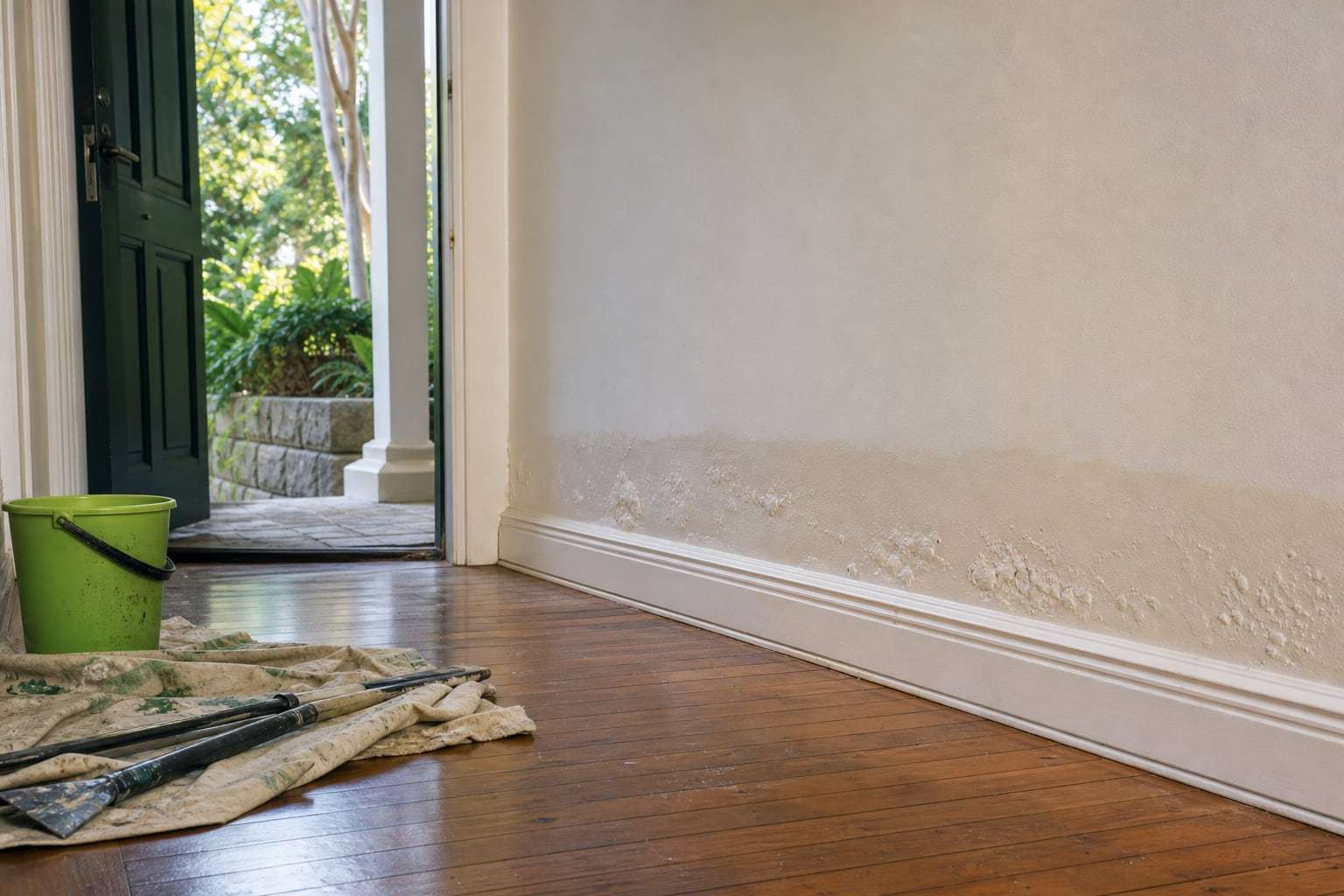
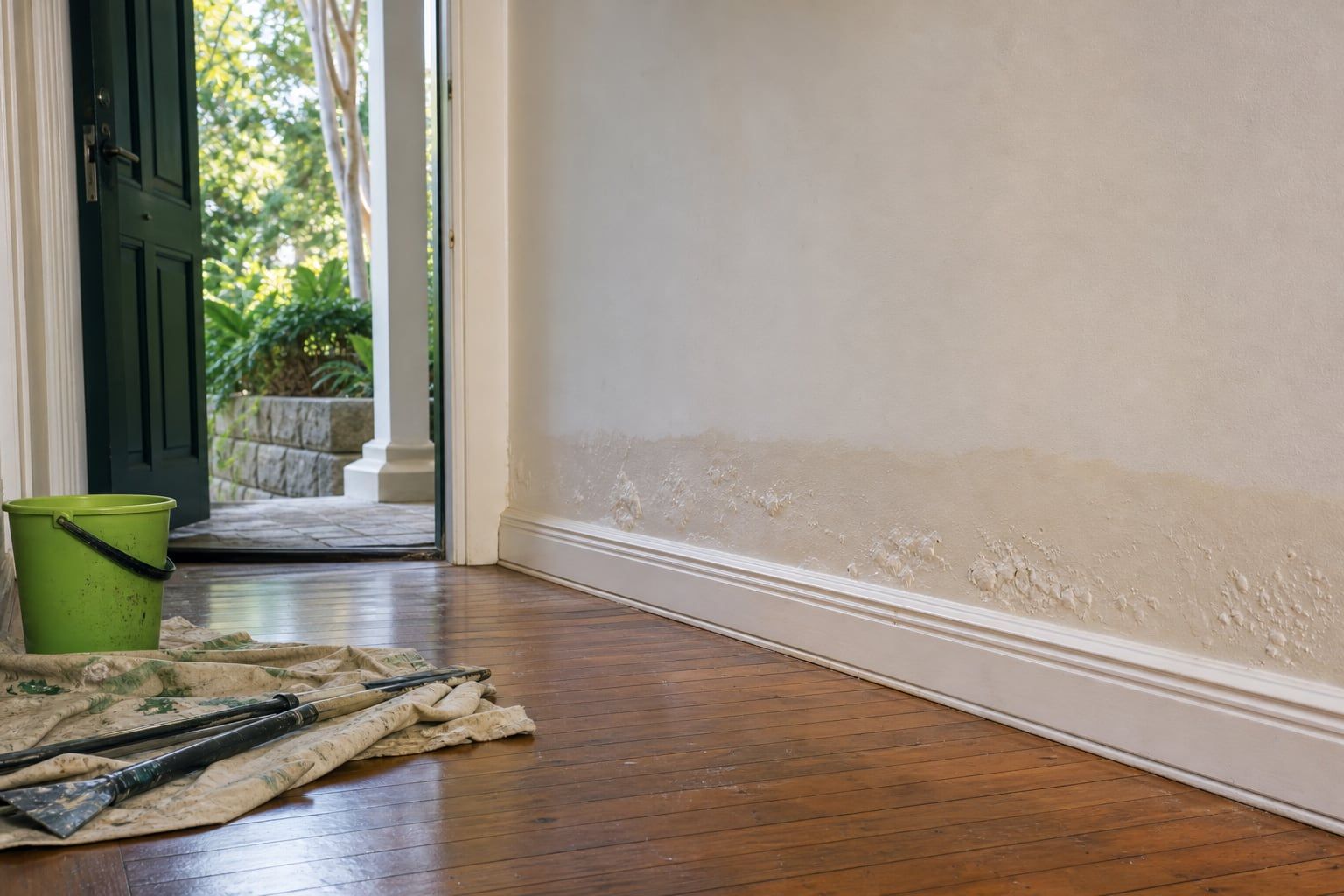
The classic signs are paint blistering or peeling in a band along the bottom of the walls, plaster that crumbles or sounds hollow, white salt deposits, a brown tide mark, and skirtings rotting from behind. In the front rooms of Federation homes, where the walls are often the thickest and least disturbed, the damage is frequently worst behind furniture and in corners.
Our page on rising damp symptoms shows each of these in detail.
Repairing old brickwork properly
Find the cause before the cure. Not every damp wall in an old house is rising damp. Leaking gutters and downpipes, broken stormwater pipes and shady, slow-drying walls all produce similar damage. A proper moisture survey works out which.
Lower the ground. Where soil or paving has been built up over the damp course, bringing it back down is often the first and cheapest fix. Sometimes it’s most of the fix.
Restore the barrier. Where the original course has failed, a new one goes in. In most double brick walls a chemical damp course injected along a mortar joint works well, with both leaves treated. Where the walls sit on sandstone or the brick is too soft, a membrane course is the better choice.
Clear the cavity. If the cavity is bridged, the debris at the bottom may need removing so the outer leaf can’t keep feeding water to the inner one.
Reopen the vents. Restoring subfloor airflow, with vents that suit the period, helps the whole house dry out.
Use compatible finishes. Salt-damaged plaster has to come off. When it’s replaced, a breathable salt-tolerant render works far better than gypsum plaster on an old damp wall. Where sound lime plaster remains, we leave it alone. Our page on salt-damaged plaster repair explains the process.
Protecting period features
Federation houses are full of details worth keeping: tuckpointed face brick, ornate cornices, picture rails, deep moulded skirtings, leadlight windows and timber joinery. Good damp repair protects them. We drill in the mortar rather than the brick, fill holes to match, cut plaster lines below cornices and picture rails where possible, and replace rotted skirtings with matching profiles.
If your house is in a conservation area or heritage listed, our guide to rising damp in heritage conservation areas covers what to think about before work starts.
When to get it looked at
If the paint is lifting along the bottom of the walls, the house smells musty, or the skirtings feel soft, it’s worth getting a survey before the damage spreads further. We’ll measure the walls, look at the outside and the subfloor, and explain what’s going on. Our page on rising damp treatment covers how a job runs, and our overview of North Shore rising damp explains how we work.
Updated
Damp in Federation homes: common questions
Something else on your mind? Call and ask.
Did Federation houses have damp courses?
Most did. They were usually slate, a bitumen-based layer or tarred felt laid in a mortar joint near the base of the wall. Many are still there, but after a century a lot have cracked, crumbled or been bridged by later work.
Should I remove the old lime plaster?
Only where it's salt-damaged. Sound lime plaster is worth keeping, because it breathes and suits the wall. We remove the contaminated areas and repair them with compatible materials.
Is cement render bad for old brick?
On older soft brick it often is. Hard cement render and cement mortar trap moisture and push salt into the brick, which can make the faces crumble. Lime-based or breathable renders usually suit these walls better.
Rising Damp Treatment on the North Shore
More guides for North Shore homeowners
- Shady blocks and damp walls: why tree-covered North Shore homes stay wetHow heavy tree cover, leaf litter, roots and slope keep North Shore walls damp, and what you can do about each one.
- Rising damp in heritage conservation areas: a guide for North Shore ownersWhat to think about when treating damp in a North Shore house in a conservation area or on a heritage list, and which methods respect the original building.