Rising damp in heritage conservation areas: a guide for North Shore owners
What to think about when treating damp in a North Shore house in a conservation area or on a heritage list, and which methods respect the original building.
Rising damp in heritage conservation areas needs a bit more thought than in a newer house. The North Shore has more conservation areas than most parts of Sydney. Large parts of Ku-ring-gai, from Roseville and Lindfield through Killara, Gordon, Pymble and Wahroonga, are covered by them, as are pockets of Mosman, Willoughby, Lane Cove and North Sydney. Many individual houses are heritage listed as well.
If you own one of these houses, the damp still needs fixing. The difference is in how you go about it: choosing methods that keep the original fabric, using materials that suit old masonry, and checking with council where the work affects the building’s significance.
This guide isn’t legal advice, and every council has its own controls. It’s an overview of what to think about before damp work starts.
Why heritage houses get damp
Most houses in North Shore conservation areas were built between the 1890s and the 1940s. They were given damp courses of slate, bitumen or tarred felt, which have now aged and in many cases failed. Ground levels have risen around them, subfloor vents have been covered, and interiors have often been refinished in less breathable materials. Our guide on damp in Federation homes explains those causes in detail.
Principles that suit old buildings
Do as much as necessary and as little as possible. The goal is to stop the damp while keeping as much original material as you can. That means repairing rather than replacing where possible, and only removing plaster that’s actually salt-damaged.
Use compatible materials. Old brick and stone were laid in soft lime mortar and finished with lime plaster. Hard cement mortars and renders, and impermeable paints, trap moisture and can damage soft masonry. Repairs should use materials that are softer and more breathable than the original wall, so the repair takes any stress rather than the original fabric.
Keep the wall breathing. Old masonry relies on being able to dry through its surfaces. Sealing it with waterproof coatings usually makes damp problems worse in the long run.
Be able to explain the work. Whatever the method, keep a clear record of what was done and why. A written method statement is useful for council, for insurers and for future owners.
Choosing a damp course method
Injected damp courses go into a mortar joint, not the brick. On sound double brick with a continuous bed joint, injection is effective and leaves only small filled holes in the mortar, which can be matched to the existing joints. On tuckpointed face brick, holes can be drilled from the inside to keep the street elevation untouched. See chemical damp course for how it’s done.
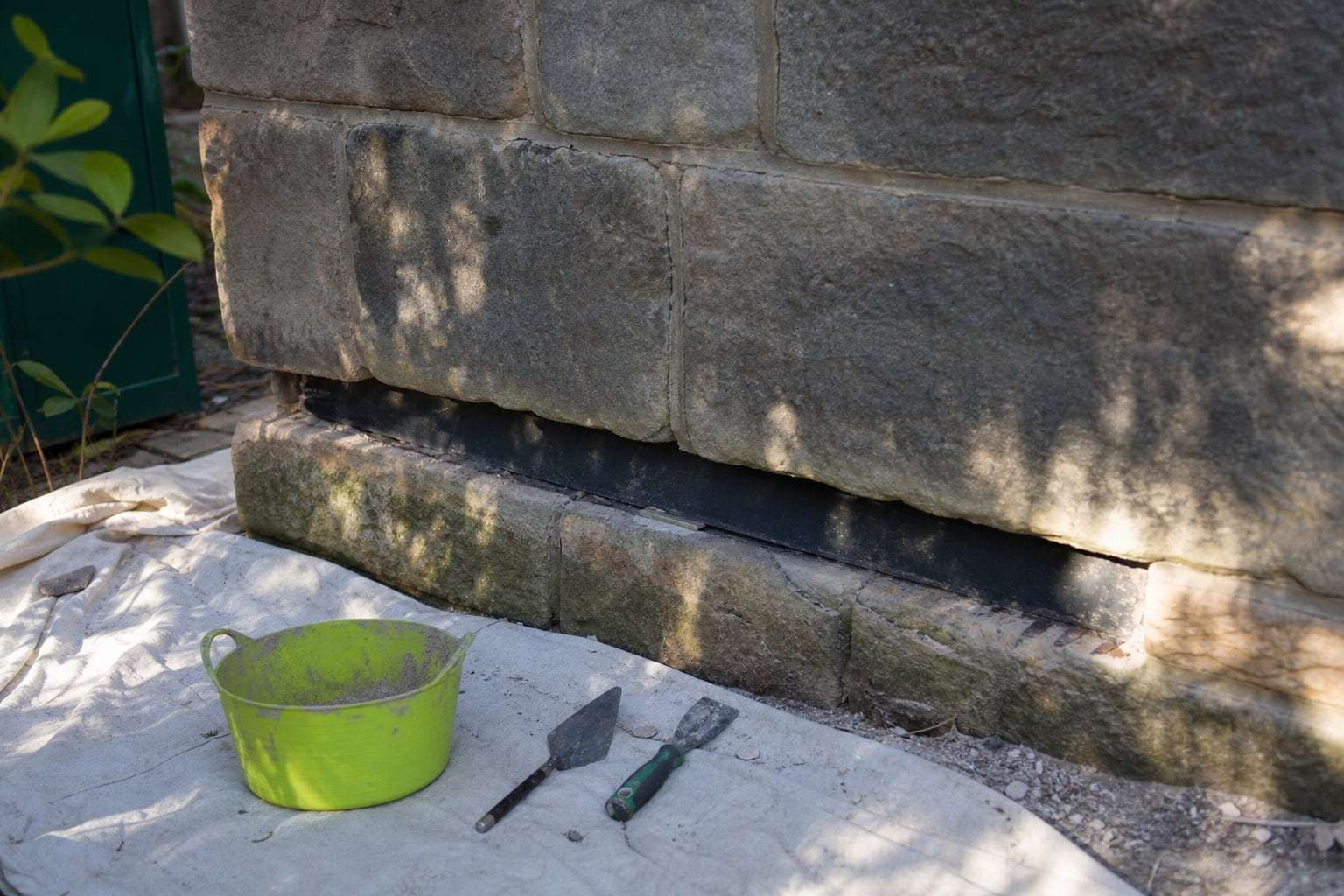
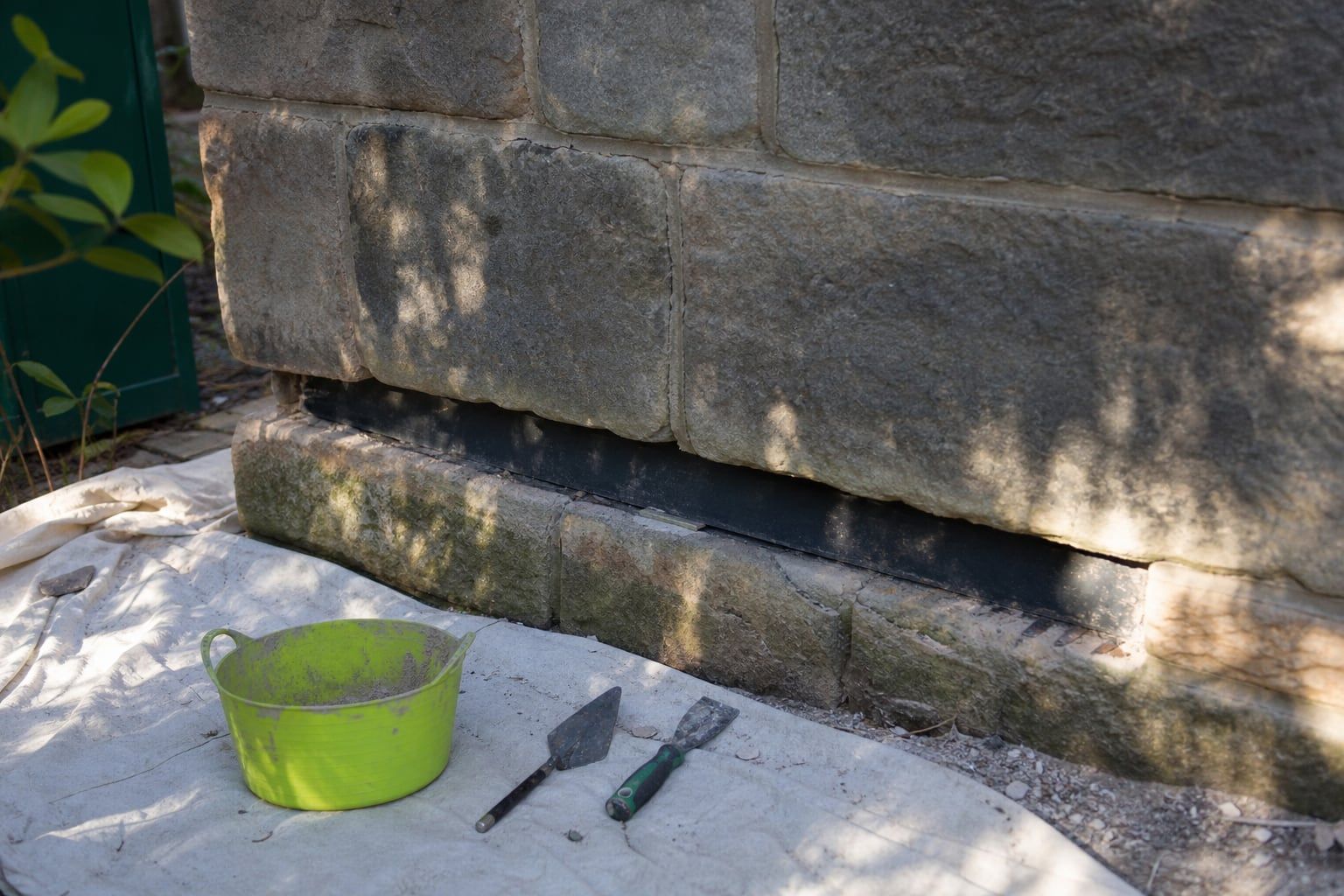
Membrane courses physically separate the wall from the ground. They’re the better choice for sandstone footings, rubble bases and soft early brick, and some heritage advisers prefer them because they don’t rely on chemicals soaking into original masonry. The joint is repacked with lime-based mortar. See physical damp course.
Non-wall fixes come first. In a heritage house, lowering garden beds and paving, repairing drainage and reopening subfloor vents are often the most effective and least intrusive steps. They don’t touch the walls at all, and sometimes they’re enough on their own.
Plaster and finishes
Salt-damaged plaster has to come off, but it should only be removed where it’s actually contaminated. Testing for salt before marking the strip line means less original plaster is lost.
The replacement should suit the wall. A breathable, salt-tolerant render is usually a better match for old masonry than gypsum plaster. Where sound lime plaster survives above the damaged zone, the new work can be blended into it. Our page on salt-damaged plaster repair covers the process.
Period details deserve care: cornices, ceiling roses, picture rails, moulded skirtings, architraves and fireplaces. Good damp work protects them and cuts the repair around them.
Talking to council
Before starting, check whether your house is individually listed, in a conservation area or neither. Your council’s planning maps or planning staff can tell you. Then ask whether the work you’re planning needs approval.
In general, councils look most closely at work that changes the street face of a building or removes significant fabric. Internal repairs and like-for-like maintenance are often treated more lightly, but that’s not a rule, and it varies between councils. Having a written method statement that explains the cause, the method and the materials makes that conversation easier.
What to look for in a damp contractor
For a heritage house, look for someone who measures before recommending anything, explains why a method suits your particular walls, uses lime-compatible materials on old masonry, and protects period details. Be wary of anyone who recommends waterproof coatings on internal walls or hard cement render on soft brick.
Getting started
We survey every wall, look at the outside and the subfloor, and give you a written plan that explains the cause, the method for each wall and the materials. If your council needs a method statement, we can provide one. Our page on rising damp treatment covers the full process, and our overview of North Shore rising damp explains how we work. If you’re not yet sure you have rising damp, see the signs of rising damp first.
Updated
Rising damp in heritage conservation areas: common questions
Something else on your mind? Call and ask.
Do I need council approval for damp work?
It depends on the council, whether the house is individually listed or in a conservation area, and what the work involves. Internal repairs and like-for-like work are often treated differently from changes to the street face. Check with your council before work starts.
Which damp course method is best for a heritage house?
It depends on the wall. Injection into the mortar suits sound brick and leaves little visible trace. A membrane course suits stone and soft brick and avoids putting chemicals into original masonry. The survey decides which.
Can I use modern paint after the repair?
On walls that have had damp, breathable paints are a better choice than standard acrylics, which can trap moisture. Mineral and some lime-based paints suit old masonry well.
Physical Damp Course on the North Shore
More guides for North Shore homeowners
- Damp in Federation homes: looking after old North Shore brickworkWhy century-old North Shore houses get damp walls, what changed since they were built, and how to repair them without harming original fabric.
- Shady blocks and damp walls: why tree-covered North Shore homes stay wetHow heavy tree cover, leaf litter, roots and slope keep North Shore walls damp, and what you can do about each one.